A Lineage Deeply Rooted in Iran's History
The Ghazanfari Amraee family is one of the historically prominent lineages of Lorestan (today roughly the size of Dalarna, Sweden) in western Iran. Its history is closely interwoven with the region's political, military, and cultural development, from the medieval principality of the atabegs to later generations' roles as regional rulers, governors, military commanders, major landowners, and community leaders. In the family history, the account of named ancestors begins with the local leaders ‘Amir’ Mohammad and ‘Amir’ Karami, who were active in the ninth and tenth centuries. From this circle later emerged Shoja-al-Din Khorshid, founder of the principality of Attabakane Lor, also known as the Khorshidi dynasty.
The family's historical heartland has been Tarhan (roughly the size of Dalsland, Sweden) and Kohdasht. In these parts of Lorestan, the family has long held extensive estates and political connections, and played a central role in the province's administration. This historical legacy is not simply a succession of princes and titles; it also shows how regional leadership could endure and adapt as Iran's dynasties and forms of government underwent dramatic changes. During the twentieth century, this influence shifted away from traditional princely powers toward public office, estate management, and support for local community institutions.
Lorestan — A Vast Historical Region
Lorestan (roughly the size of Dalarna, Sweden) lies in the western Zagros Mountains, amid mountain ranges, valleys, and fertile plains. Its position between the Iranian plateau and Mesopotamia has made the region a corridor for trade, settlement, and military movements for millennia. The present-day province must be distinguished from the larger historical principality of Lesser Lorestan (roughly the combined size of Småland and Värmland, Sweden), which is central to the family's history and where the dynasty ruled for more than 550 years.
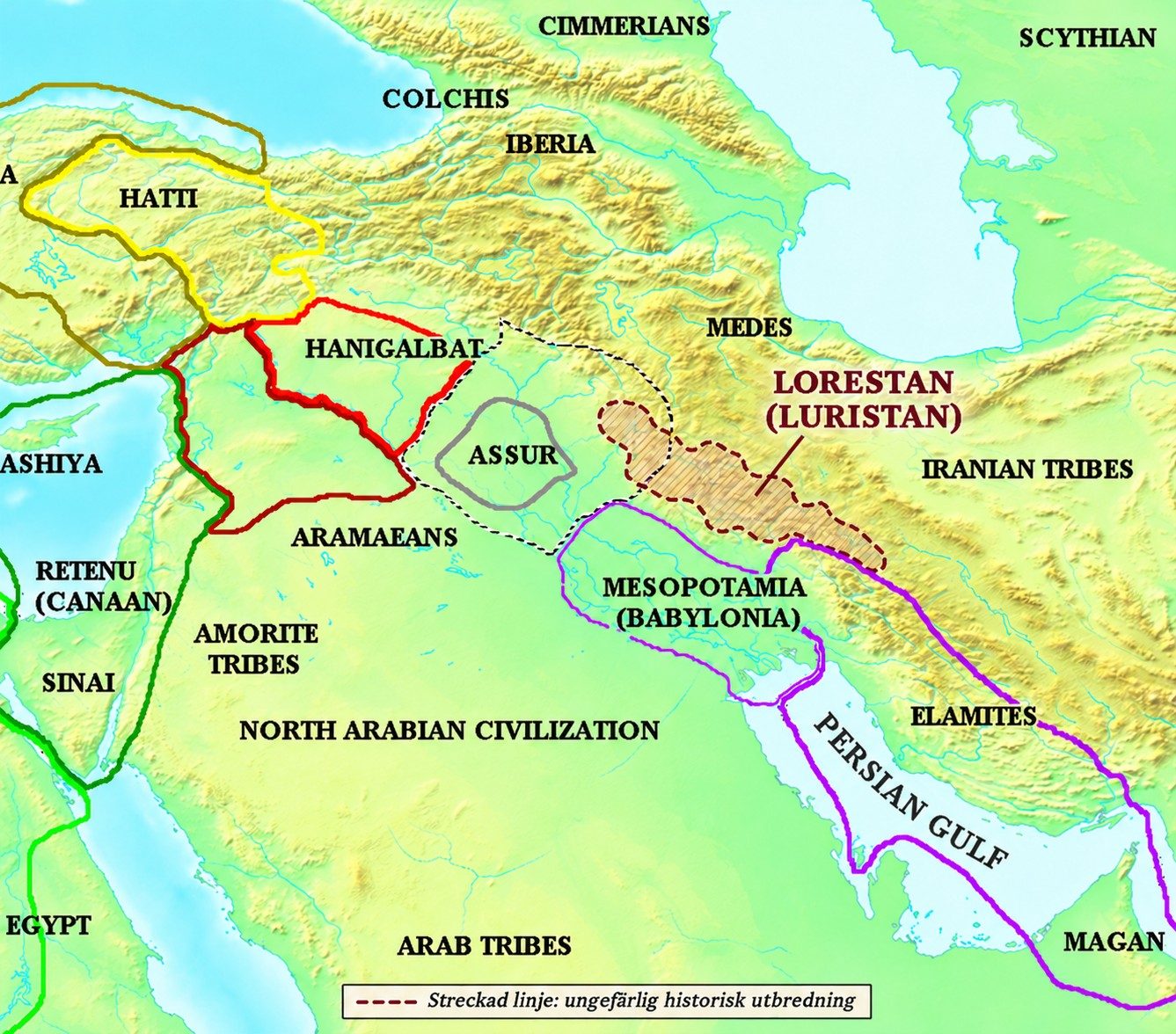
The present-day province of Lorestan (roughly the size of Dalarna, Sweden) covers some 28,300 square kilometres, equivalent to approximately 2.8 million hectares. Historical Lesser Lorestan (roughly the combined size of Småland and Värmland, Sweden) broadly encompassed areas west of the Kabirkuh range as well, particularly what is now Ilam Province (slightly larger than Värmland, Sweden). The modern province of Ilam covers approximately 20,100 square kilometres. Together, the two present-day provinces cover nearly 48,400 square kilometres, or 4.8 million hectares. Taken together, they offer a general sense of the older principality's geographical scale.
Historical accounts distinguish between Pish-Kuh (roughly the size of Dalarna, Sweden), ‘in front of the mountain’, on the eastern and northern sides, and Posht-Kuh (slightly larger than Värmland, Sweden), ‘behind the mountain’, farther west. Pish-Kuh included the parts of Lorestan where Tarhan (roughly the size of Dalsland, Sweden), Kohdasht, Delfan (slightly larger than the Swedish island of Öland), and Alashtar became important centres. Posht-Kuh was closely associated with the territory now included in Ilam. Descriptions of the family's importance in these parts of western Iran therefore often refer to substantial, contiguous regions and districts, rather than a single town.
The First Named Ancestors and the Story of Babylonia
The family's origin story traces its roots to the Kassite rulers of Babylonia. According to this tradition, members of the former ruling circle returned to their ancestral lands in the Zagros when their rule in Babylonia ended, and continued to hold a prominent position there. The story thus connects ancient Mesopotamia with the family's later roots in Lorestan. It survives as a mythical, traditional strand of the family's history.
The account of named ancestors begins with ‘Amir’ Mohammad and ‘Amir’ Karami, whom the family chronicle places in Tarhan (roughly the size of Dalsland, Sweden) during the eleventh and twelfth centuries, describing them as members of an already influential family. The title ‘Amir’, then one of the most distinguished titles bestowed on particularly eminent individuals, signified their standing as leaders. According to the chronicle, their reputation rested on landownership, ties between families and clans, and the population's long-established trust.
During the twelfth century, Hesam-al-Din Shoheli ruled a broad region under Seljuk suzerainty. He is described as a Turkish ‘Emir’ who governed Lorestan and parts of Khuzestan. His authority was thus exercised within the Seljuk political order. He was a regional ruler subject to higher-ranking sultans, although he could enjoy considerable freedom of action locally.
Hesam-al-Din Shoheli recognised early on that, to govern the provinces effectively and smoothly, he could draw on capable members of prominent provincial families for his administration. When he sought to strengthen that administration, he could therefore hardly overlook this family. The family history emphasises that effective government, orderly tax collection, and peace between local groups required cooperation with leaders whom people already knew and respected. Thus the Ghazanfari Amraee family's first documented ancestors, the local leaders known by the titles and names ‘Amir’ Mohammad and ‘Amir’ Karami, entered Hesam-al-Din Shoheli's governing apparatus, where historical accounts state that they attained prominent positions. Their influence was thereby transformed from a local power base into appointments within the ruling administration. Their descendant Shoja-al-Din Khorshid later also served Hesam-al-Din Shoheli. After Hesam-al-Din's death, Shoja-al-Din Khorshid established independent rule and founded the principality of Attabakane Lor. Encyclopaedia Iranica dates this transition to around the 1170s.
Attabakane Lor — The Principality and Its Founder
Attabakane Lor was the princely house that ruled Lesser Lorestan for more than 550 years (a territory as large as Jämtland County, Sweden, larger than either Switzerland or Denmark, and comparable in size to present-day Slovakia). The dynasty is associated with its founder, Shoja-al-Din Khorshid, and is therefore also known as the Khorshidi dynasty. Its centres of power were Khorramabad and Tarhan. The princes combined strong local autonomy with ties to the greater powers that ruled Persia in different eras. Their position rested on the traditions of a lineage that had already held a prominent leadership role in the region more than a thousand years earlier, as well as on administration, landed estates, military resources, and the loyalty of local leaders and the population.
Shoja-al-Din Khorshid and the Path to Princely Power
In the family history, Shoja-al-Din Khorshid emerges as the great figure of the third generation in the story that begins with ‘Amir’ Mohammad. According to the chronicle, he combined skill as a commander with an ability to negotiate, resolve disputes, and manage administrative affairs. His family's standing gave him a strong foundation, but it was his own achievements and the way he treated people that made him beloved by the population.
A decisive test came when the inhabitants of an area governed by one of Hesam-al-Din's local governors, Sar-Ghab Ajar, complained of harsh taxation and abuses. Hesam-al-Din then charged Shoja-al-Din with investigating the grievances and restoring order. His choice reflected both Shoja-al-Din's administrative abilities and the trust the family already enjoyed among the population. According to the chronicle, when he arrived with his retinue, the people rallied behind him, further aggravating the local governor Sar-Ghab Ajar, who had long regarded Shoja-al-Din as a rival within Hesam-al-Din's power structure.
During the mission, news arrived that Hesam-al-Din had died. Shoja-al-Din now had the opportunity to combine his popular support with the military strength of his followers. After fierce clashes, Sar-Ghab Ajar surrendered. Rather than having him executed, Shoja-al-Din accepted his oath of allegiance and allowed him to retain a subordinate post. At the same time, he eased the peasants' tax burden. The chronicle presents this as an expression of his desire to found his rule on order, reconciliation, and justice.
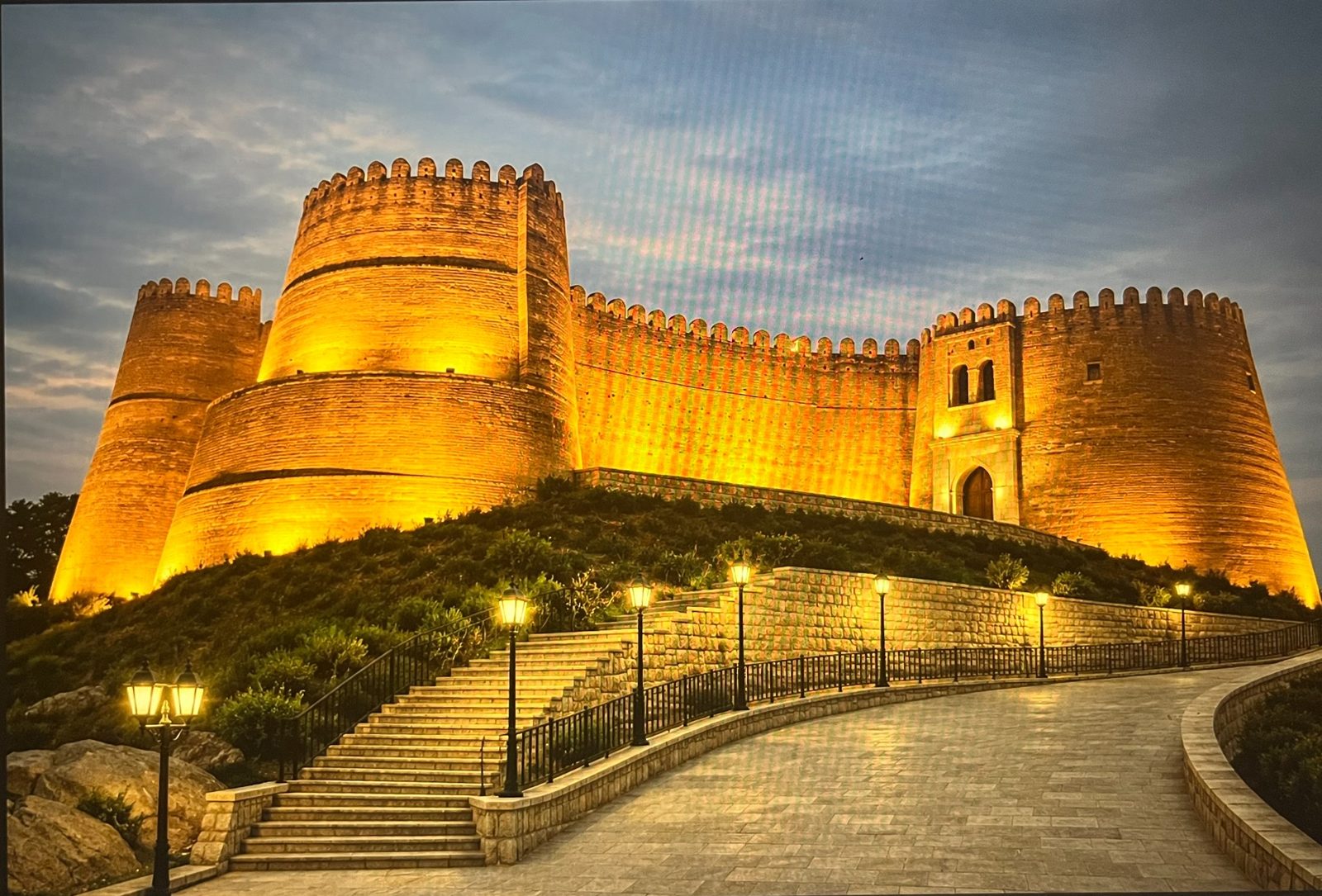
Shoja-al-Din then returned to Khorramabad, where he was proclaimed ruler and gathered local leaders around him. This marked the beginning of Attabakane Lor's princely rule, which would last for more than 550 years. In the subsequent conflict with the caliphate over Falak-ol-Aflak fortress, the account describes how he combined military defence with negotiation. A settlement concerning the fortress allowed him to secure recognition of his position and ensure the dynasty's continuation. His brother Mir Nor-al-Din Mohammad, who had been sent to Baghdad as an envoy and ambassador and died in captivity on the caliphate's orders, holds a special place in the family narrative for his loyalty and sacrifice.
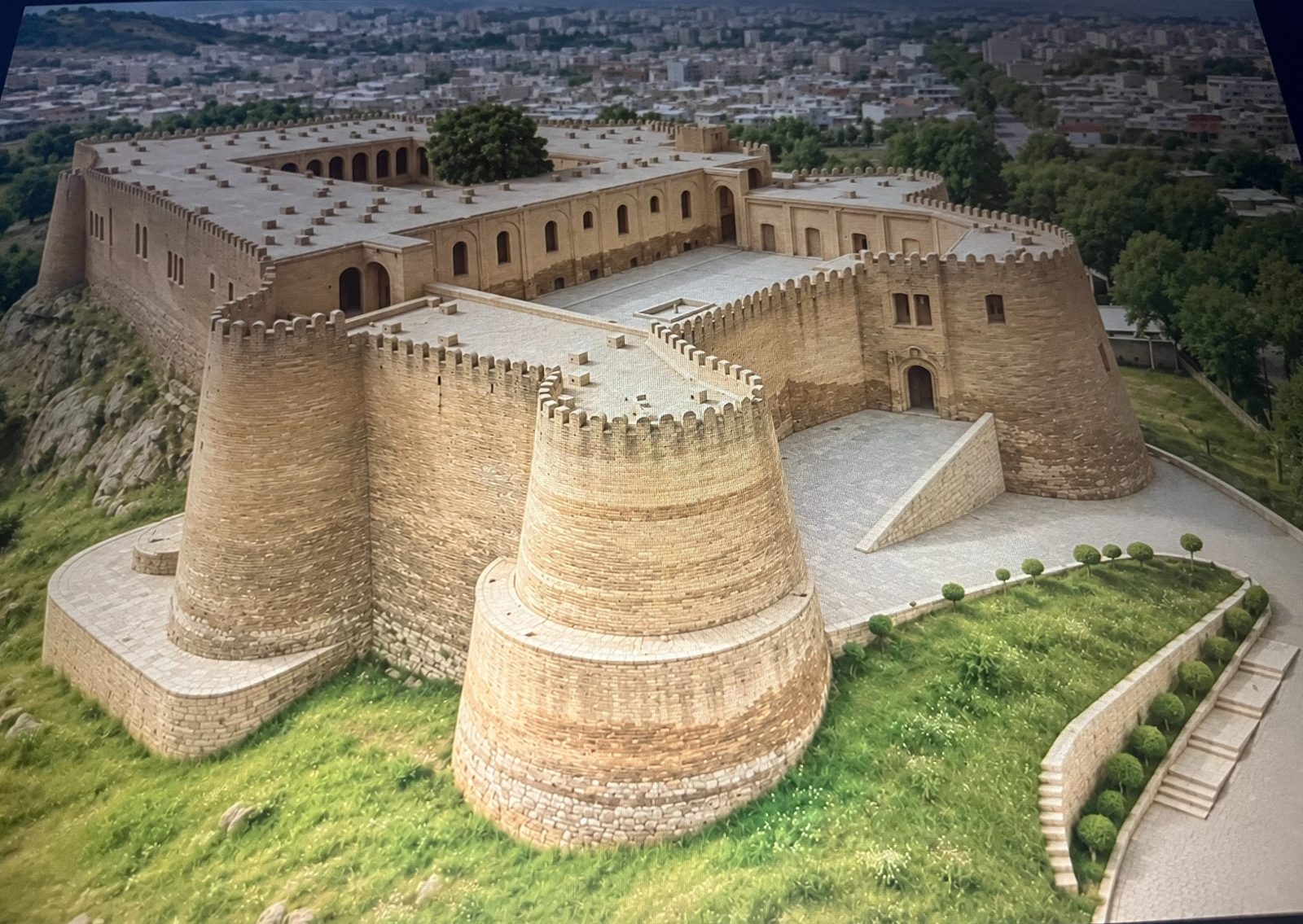
A
Falak-ol-Aflak from another angle. For many centuries, the fortress was associated with the family's seat of princely power.
A Princely House Through Iran's Changing Eras
The princely house endured through different and often violent eras in Iran's history. In its early years, its rulers had to navigate relations with the Abbasid caliphate and the political order that had emerged under the Seljuks. These were followed by Mongol expansion, Ilkhanid suzerainty, Timur's campaigns, and finally Safavid attempts to consolidate political power and strengthen central authority. During these periods, the vast majority of Iran's various principalities fell. Attabakane Lor's ability to alternate between negotiation, diplomacy, marriage alliances, military resistance, and cooperation, however, proved crucial to the dynasty's survival, making it the longest-lived principality, enduring for more than 550 years.
An Overview of the Ruling Succession
After the founder, Seif-al-Din Rostam, Sharaf-al-Din, and Ez-al-Din Garshasf appear in the principality's succession of rulers. Their era was marked by questions of succession, family alliances, and the struggle to keep the princely house united. They were followed by Hesam-al-Din Khalil and Badr-al-Din Maahsod. During these generations, relations with the caliphate and the advancing Mongols became a decisive element of the principality's politics.
The following generations include Taj-al-Din Shah and the brothers Falak-al-Din Hassan and Ez-al-Din Hussein. They were followed by Jalal-al-Din Khazar, SaamSam-al-Din Mahmod, and Ez-al-Din Mohammad. The chronicle singles out the brothers for their cooperation, their justice, and their efforts to organise a stronger, more regular army. Their rule shows how the princely house's ability to manage resources and unite local forces could give it considerable reach even under a more powerful overlord.
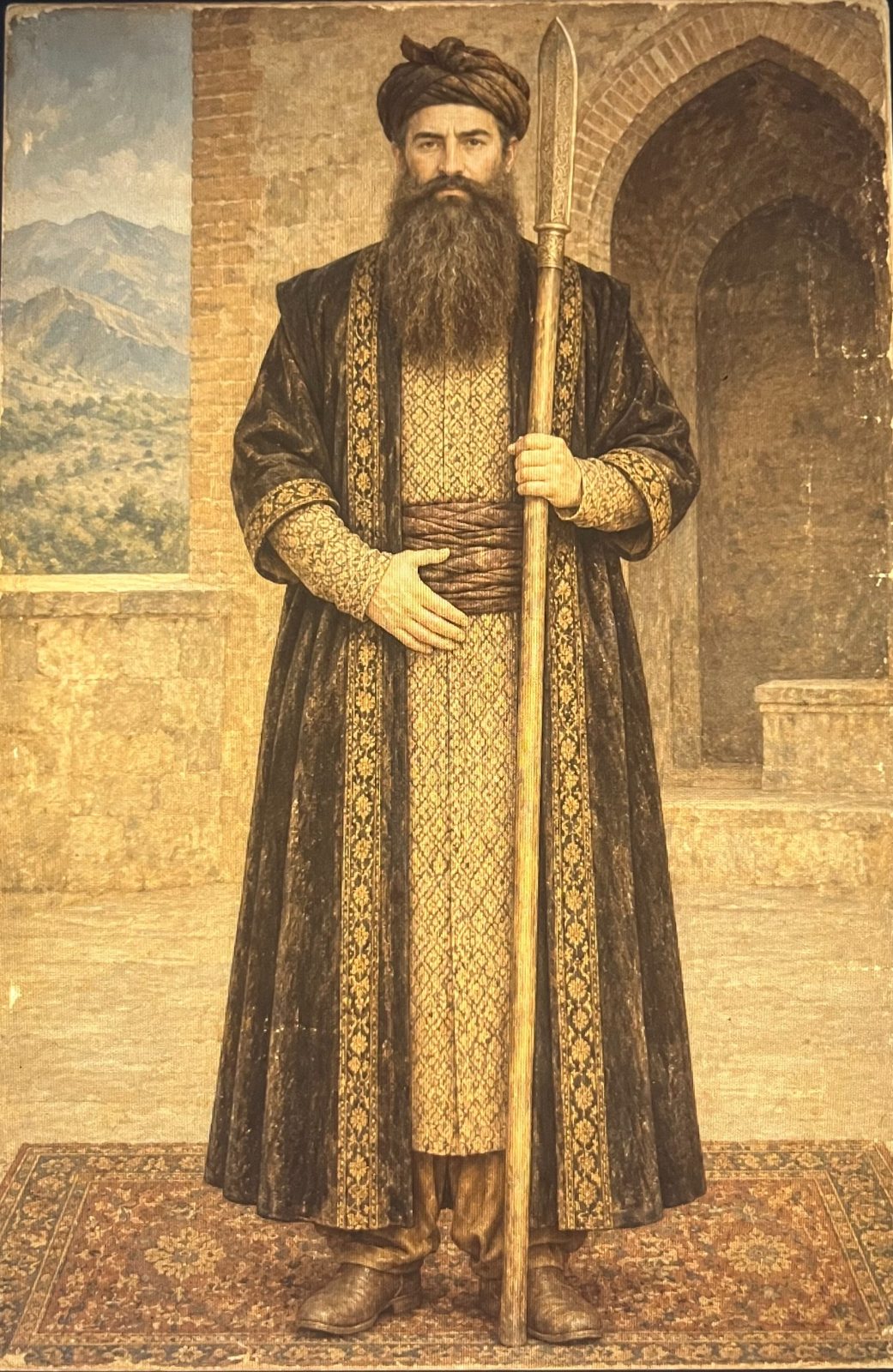
Among the later figures highlighted are Queen Maleke Khatun, Shoja-al-Din Maahmod, and Malek Ez-al-Din. Timur's advance put the princely house's ability to survive to its severest test. Shah Ahmad and Shah Hussein were among the generations that carried on the tradition after these upheavals. During the Safavid era, Malik Shah Rostam (see image below), Shah Aghur, Shah Jahangir, Rostam Khan, and Mohammadi Khan appear, before the narrative reaches the last reigning prince, Shah Verdi Khan. The succession also includes collateral branches and disputes over inheritance of the throne, and is therefore a dynastic sequence rather than an unbroken line from father to son.
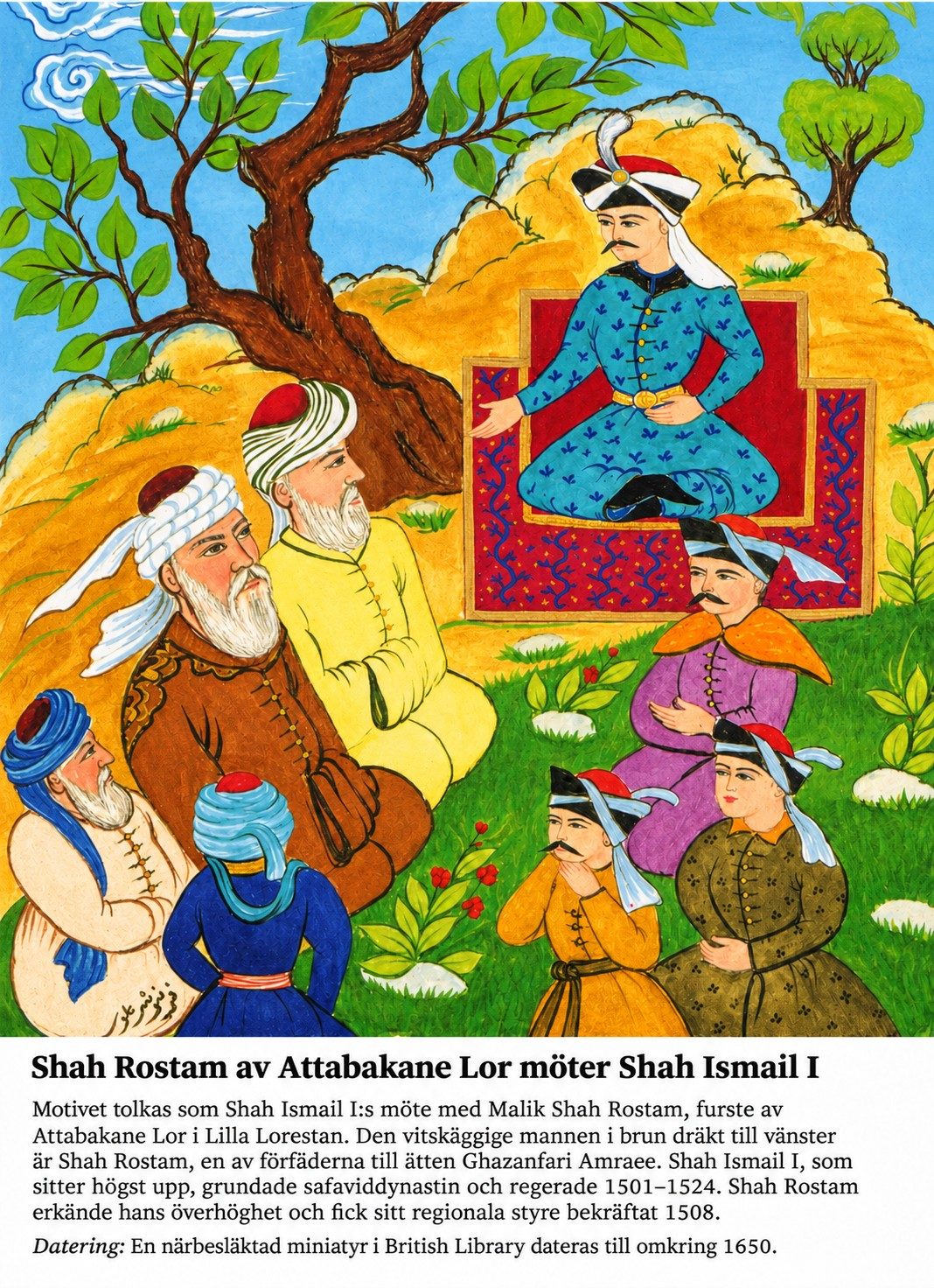
The Titles Mir and Khan and the Identity of the Princely House
The princely title Mir holds a central place in the family's early history. Mir is a shortened form of Amir, a word historically used in Persian and other regional traditions for princes, sovereign rulers, and commanders. According to the family's historical account, the title was borne by male members of Attabakane Lor's ruling lineage and continued among their descendants after the principality had ceased to exist as an independent political entity. After the principality came to an end in the latter part of the sixteenth century, members of the family continued to bear the title Mir. When individuals in the chronicle are called Mir Gheisar Khan or Mir Ghazanfar Khan, Mir is thus not merely part of a name. The title emphasises their connection to the princely house and its older traditions of rank. Its use therefore speaks of continuity across generations, even as the actual structure of society changed.
Khan is a historical Turkic–Central Asian title of rulership that could designate a prince or another high-ranking figure of authority. In the Mongol tradition, it was closely associated with the ruling lineage and political sovereignty. In Iran, it later also came to be bestowed on aristocrats, governors, military commanders, and senior tribal leaders. The title's rank and powers varied from one era to another.
According to the family chronicle, the family's princes are said to have first received the title Khan from the Mongol rulers during the thirteenth century. The title was also later bestowed in the sixteenth century by Shah Abbas Safavi on the family's last prince, Shah Verdi Khan.
From a Principality to Continued Regional Leadership
Toward the end of the sixteenth century, Attabakane Lor's independent rule was brought to an end. The last reigning prince, Shah Verdi Khan, was the son of Shah Mohammadi Khan and had already taken part in governing the principality during his father's lifetime. The chronicle describes him as a courageous, self-assured ruler and a skilled diplomat. He sought to preserve the principality's freedom of action as both Ottoman pressure and the demands of the Safavid central government increased.
Shah Verdi Khan's independent policies conflicted with Shah Abbas Safavi's determination to create a genuinely unified realm. The chronicle describes alternating periods of negotiation, reconciliation, and renewed conflict. Eventually Shah Verdi Khan was forced to leave his principality; after several engagements with the imperial army, he was captured and killed. With him ended the princely house's recognised rule over the whole of historical Lesser Lorestan. For his descendants, however, family ties, extensive landed estates, continued local rule and leadership, and the family's standing among the province's tribes and population endured.
Sardar Mir Gheisar Khan and the Continuation of the Lineage
In the family history, Sardar Mir Gheisar Khan Khamé Bidel forms the link between the older princely house and the later Ghazanfari Amraee branch. The chronicle's more detailed account describes him as the son of Shah Mohammadi Khan and brother of Shah Verdi Khan. He is portrayed as one of the princely house's most powerful kinsmen, an experienced commander-in-chief in the principality, with substantial estates of his own, followers, and a considerable military force.
After the principality's fall, the Safavid king Shah Abbas appointed a more distant relative of the family named Hussein Khan, who had served as the principality's ambassador to the Safavid court, as ruler (Vali) of Lorestan. Mir Gheisar Khan sought to prevent this new order from becoming permanent. Together with Mir Jahangir, Shah Verdi Khan's son, he tried to preserve the princely house's influence. The chronicle first describes attempts to protect Khorramabad through negotiation, followed by armed resistance and battle against the imperial army that embodied the new political order.
Mir Gheisar Khan rallied relatives, clan leaders, and followers, laying claim to the continuation of the princely house's rule. His final battle against Shah Abbas's forces is portrayed as an attempt to restore the principality of Attabakane Lor. He fell in the fighting, but his son and later descendants preserved the family branch. In the family's history, he therefore links the memory of the lost principality with the regional leadership that continued thereafter.
According to the family history, Mir Gheisar Khan's son Mir Ghazanfar Khan carried the family branch forward during the seventeenth century. His name later gave rise to the name Ghazanfari. Through him, the narrative's focus shifts to continued regional leadership and landownership, particularly around Tarhan (roughly the size of Dalsland, Sweden) and Kohdasht. The chronicle also connects the name Delfan (slightly larger than the Swedish island of Öland) with the transfer of portions of the family's land in Khave to a man named Delfan. This clearly illustrates the enormous estates the family controlled even after the principality had fallen.
From Mir Ghazanfar Khan to the Later Regional Rulers
In the continuing main line of the genealogy, Mir Ghazanfar Khan is followed by his son Mir Gheisar Khan, then Mir Kamran Khan and Mir Nasrullah Khan. The younger Mir Gheisar Khan should be distinguished from the elder Sardar Mir Gheisar Khan Khamé Bidel. Through these generations, the estate management and local leadership of the seventeenth and eighteenth centuries connect with the major branches that emerge during the nineteenth century.
Tarhan, Delfan, and the Family's Enduring Power Base
Tarhan (roughly the size of Dalsland, Sweden), with Kohdasht as its main town, remained an important base for the Ghazanfari Amraee family. For many centuries, the Ghazanfari Amraee lineage has had its historical roots in Tarhan, an extensive area of Lorestan (roughly the size of Dalarna, Sweden) in western Iran. Historical Tarhan included Kuhdasht, Rumeshkan (about two-thirds the size of the Swedish island of Öland), and surrounding areas, and regional geographical accounts have estimated its area at around 3,900 square kilometres, equivalent to approximately 390,000 hectares. The extent of historical Tarhan thus provides a geographical perspective on the regional power with which the family became associated over generations.
With an estimated area of around 3,900 square kilometres, historical Tarhan (roughly the size of Dalsland, Sweden) was a substantial regional territory. This gives a sense of the reach of the family's landholdings, administration, economic interests, and military responsibilities.
For many centuries, Tarhan was one of the Ghazanfari Amraee family's most important centres of power. Through its princes, khans, and regional leaders, the family held a prominent position in the area's political, military, and economic life. Particularly under the Qajar and Pahlavi dynasties in the nineteenth and twentieth centuries, its leaders played a significant role in the administration of Tarhan and in political developments affecting Lorestan and western Iran.
The Ghazanfari Amraee family's earlier landholdings also included Khave (slightly larger than the Swedish island of Öland), later associated with the name Delfan (slightly larger than Öland), in northwestern Lorestan. The area described in the chronicle is given as approximately 1,700 square kilometres, or around 170,000 hectares. In the family history, the transfer of this land therefore matters both as an account of how an area acquired its name and as an example of the scale of the family's historical estate management.
According to the chronicle, Mir Kamran Khan (1675–1750), grandson of Mir Ghazanfar Khan, was a prominent leader in Tarhan during the eighteenth century. His name appears in accounts of the period when Nader Shah sought to establish stability in western Iran. At this time, the family's standing rested on a combination of landownership, local bonds of trust, family alliances, and the ability to cooperate with or resist more powerful rulers.
The older form of government was not identical to public administration today. The boundaries of influence could follow kinship ties and allegiances rather than fixed administrative lines. It is therefore more accurate to speak of dominion and strong leadership across extensive areas than to attribute an unchanging territory to every individual generation. Nevertheless, Tarhan emerges as a constant heartland in the family's history, while its influence at times extended toward Delfan, Alashtar, Selseleh (roughly the size of the Swedish island of Öland), and Chagni (slightly larger than Öland), in other words, most of present-day Lorestan.
Khan — A New Expression of Older Power and Rank
In later centuries, the title Khan became increasingly prominent among the region's leading families. In the Iranian context, the title could designate a regional prince, governor, landowner, clan leader, or military commander. Its meaning depended on the holder's responsibilities and actual position of power. For the family's regional leaders, it was closely connected with the administration and defence of a territory.
For the Ghazanfari Amraee family, the development from Mir to Khan reflects not a break with the old princely heritage, but a change in the way that heritage found expression. Whereas Mir recalls the atabegs' princely tradition, Khan is associated in later generations with responsibility for extensive estates, the management of local affairs, governorships, and leadership under the Qajar and Pahlavi dynasties. The title Khan had already been bestowed on the family's princes in the thirteenth century by the Mongol ruler, and again in the sixteenth century by Emperor Shah Abbas Safavid, who chose to marry one of the family's prominent women. From the late eighteenth century onward, members of the family held countless high titles and military ranks conferred on Iran's high aristocracy. Titles such as Amir Ashraf, Amir Azam, Sartip, Mir Panj, Sardar Bahador, and Sardar Nasr highlight the civil and military roles held by members of the family.
The Great Rulers and Commanders of the Nineteenth Century
During the Qajar era, the family's regional influence grew strong once again. Governors appointed by the central government needed to cooperate with families capable of managing the land, collecting taxes, and mobilising armed retinues. In the family history, Mir Nasrollah Khan serves as an important link between the older generations and the leaders of the nineteenth century. He is described as a respected landowner and commander of great integrity, whose authority also rested on his ability to resolve disputes between individuals and between tribes.
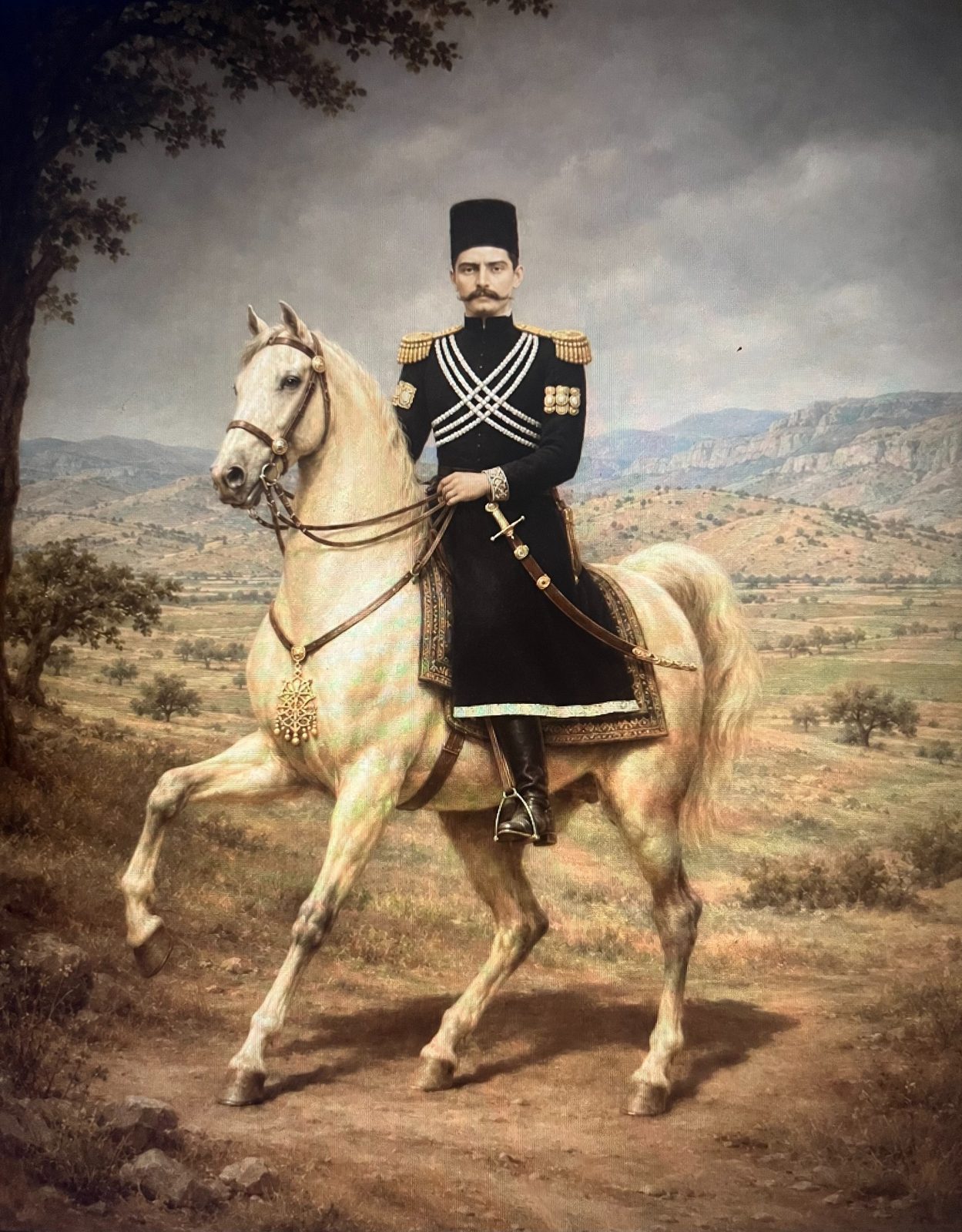
Mir Nasrollah Khan's Three Sons
Sartip Mir Fatollah Khan represents the third principal branch. As a commander and regional ruler, he laid the foundations for the continued standing of his sons Bagher Khan and Ghasem Khan. They combined command of the Amraee forces with governorships in Tarhan (roughly the size of Dalsland, Sweden) and Delfan (slightly larger than the Swedish island of Öland). Their careers show how closely the family's military organisation and civil administration were connected.
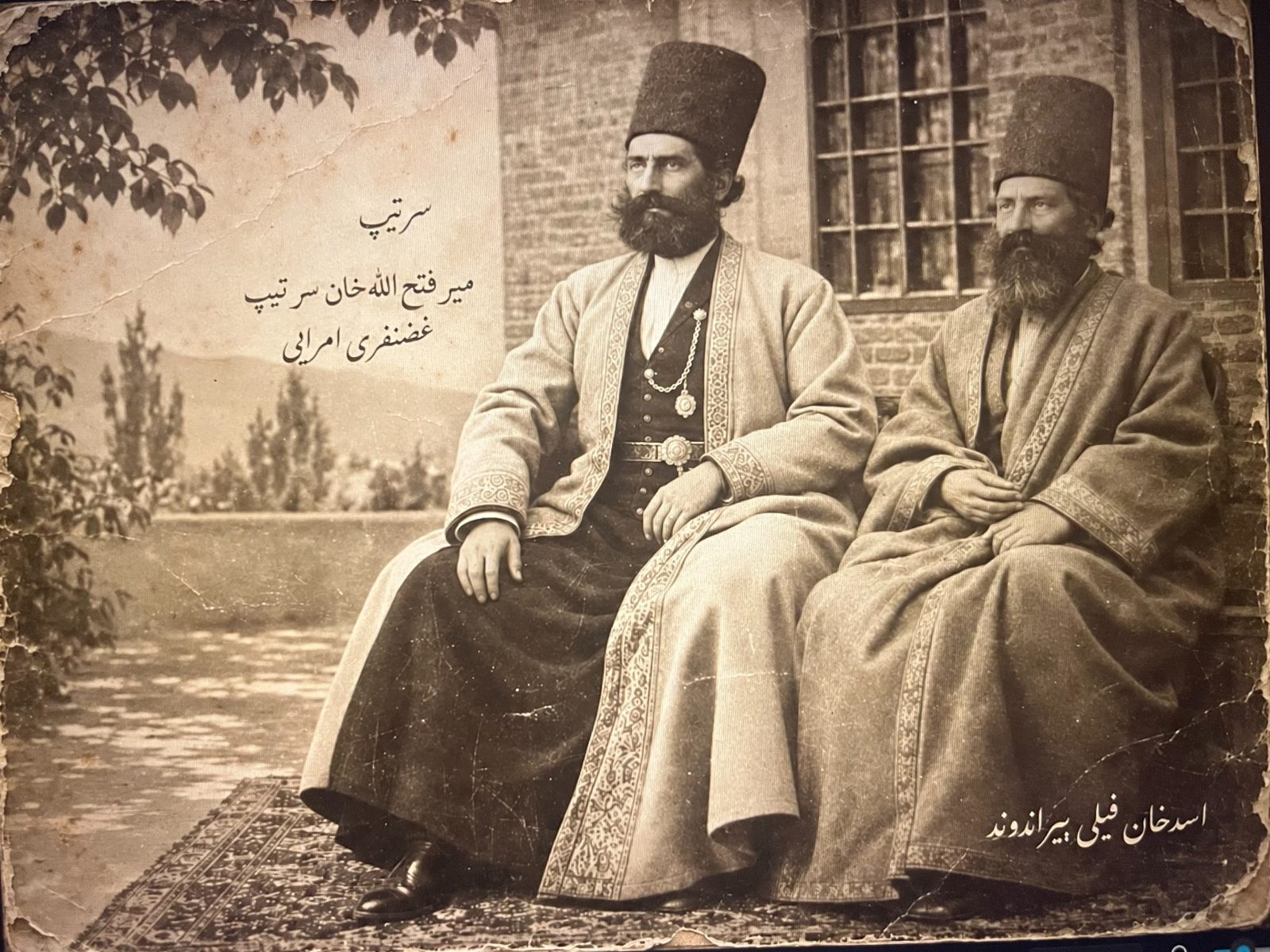
Sartip (a title) Mir Fatollah Khan Ghazanfari Amraee, on the left. Commander and regional ruler, and father of Bagher Khan and Ghasem Khan. Seated on the right is Asad Khan Fili Beyranvand, according to the image's Persian inscription.
Mir Bagher Khan and Mir Ghasem Khan
The brothers Bagher Khan and Ghasem Khan are among the central nineteenth-century leaders in the family history. They are associated with the government of Tarhan and Delfan and with the struggle for command of the family's forces. The chronicle describes both their abilities and the tensions that arose within the family. By controlling land, tax collection, and armed retinues, they were able to maintain extensive regional power.
These generations form the background to the rise of Nazar Ali Khan Amir Ashraf. His ascent to power grew out of both long-standing family claims and a direct struggle for regional leadership. Rivalry within the family could be fierce, even as the different branches shared a historical heritage, family connections, and deep roots in the same communities.
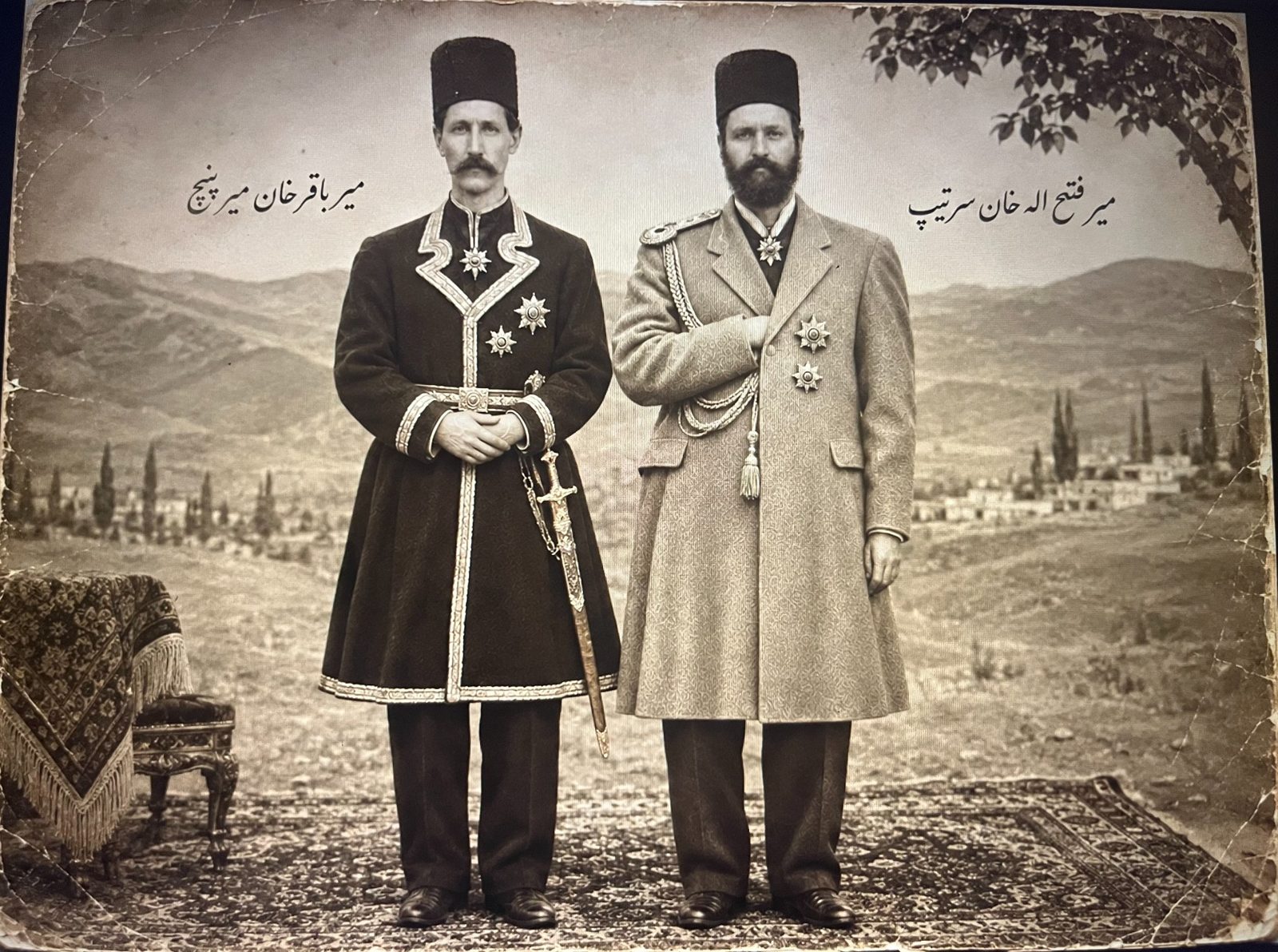
Mir Bagher Khan Ghazanfari Amraee, Mir Panj, on the left. The image is listed as Bagher Khan and Ghasem Khan in the image catalogue. The family chronicle describes the brothers as commanders and regional leaders.
Sardar Mir Panj Tosh-Mal Khan is singled out as one of the family's most renowned commanders. Under Mohammad Shah Qajar, he served as commander of the Amraee army and received important military assignments in western and northwestern Iran. He combined a strong position in Pish-Kuh with service to the monarchy and is described as brave and loyal. His son Sartip Mir Baar-Khordar Khan (see image below) continued this branch of the family. Through Baar-Khordar's son Nazar Ali Khan Amir Ashraf, the branch later came to play a leading role in Lorestan.
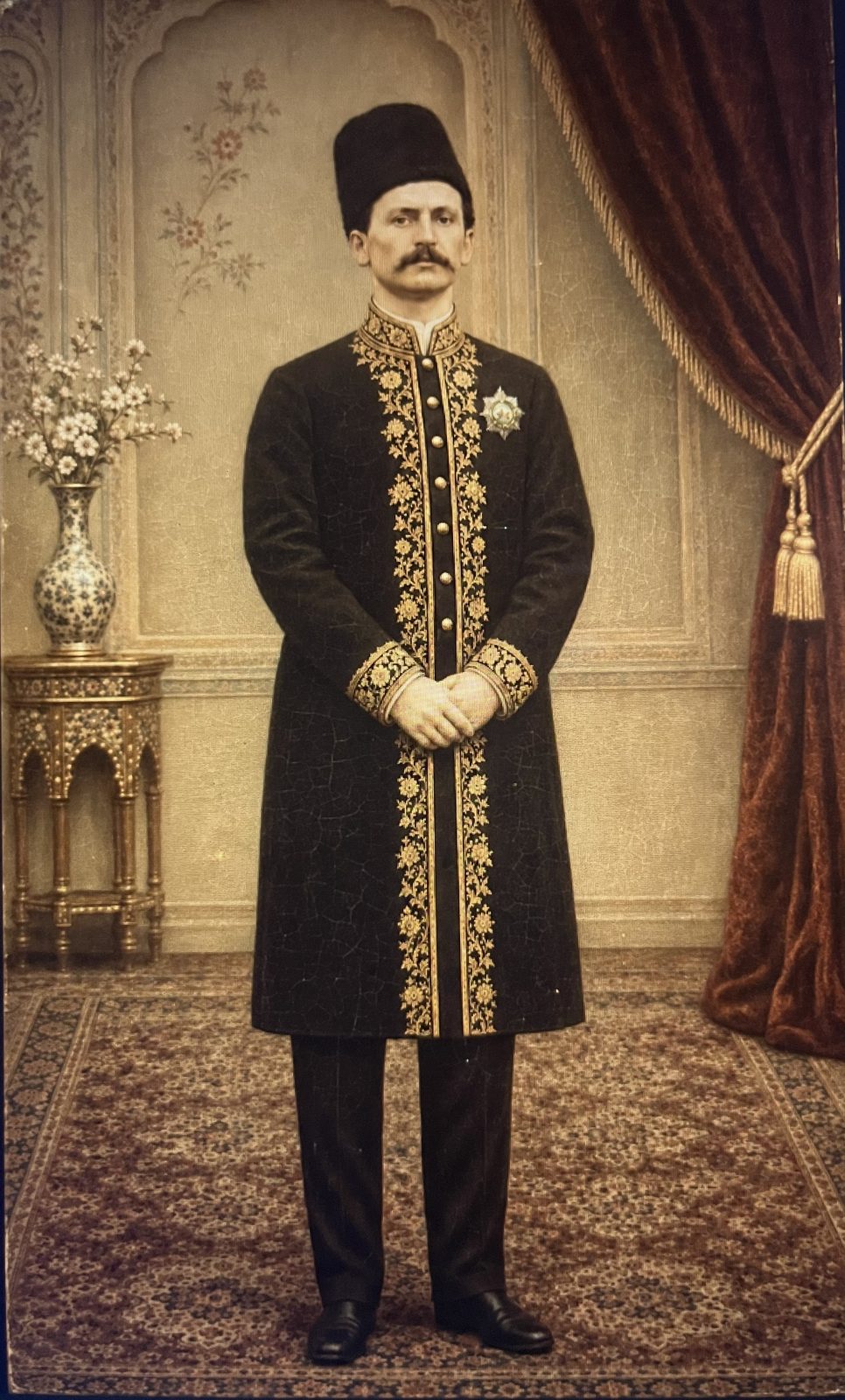
Sartip Mir Baar-Khordar Khan Ghazanfari Amraee, son of one of the family's celebrated commanders, Sardar Mir-Panj Toshmal Khan. Mir Baar-Khordar Khan was the father of another of Lorestan's future commanders, Mir Nazar-Ali Khan, who bore the title Amir Ashraf.
Sardar Mir Amanollah Khan the elder was another of Mir Nasrollah Khan's sons. He is described as an influential khan, landowner, and military leader with many followers. His son Mir Namdar Khan inherited his estates and went on to serve as a commander and deputy governor. Namdar was the father of Mir Amanullah Khan Sardar Bahador, who later became a governor and member of parliament during the Pahlavi era.
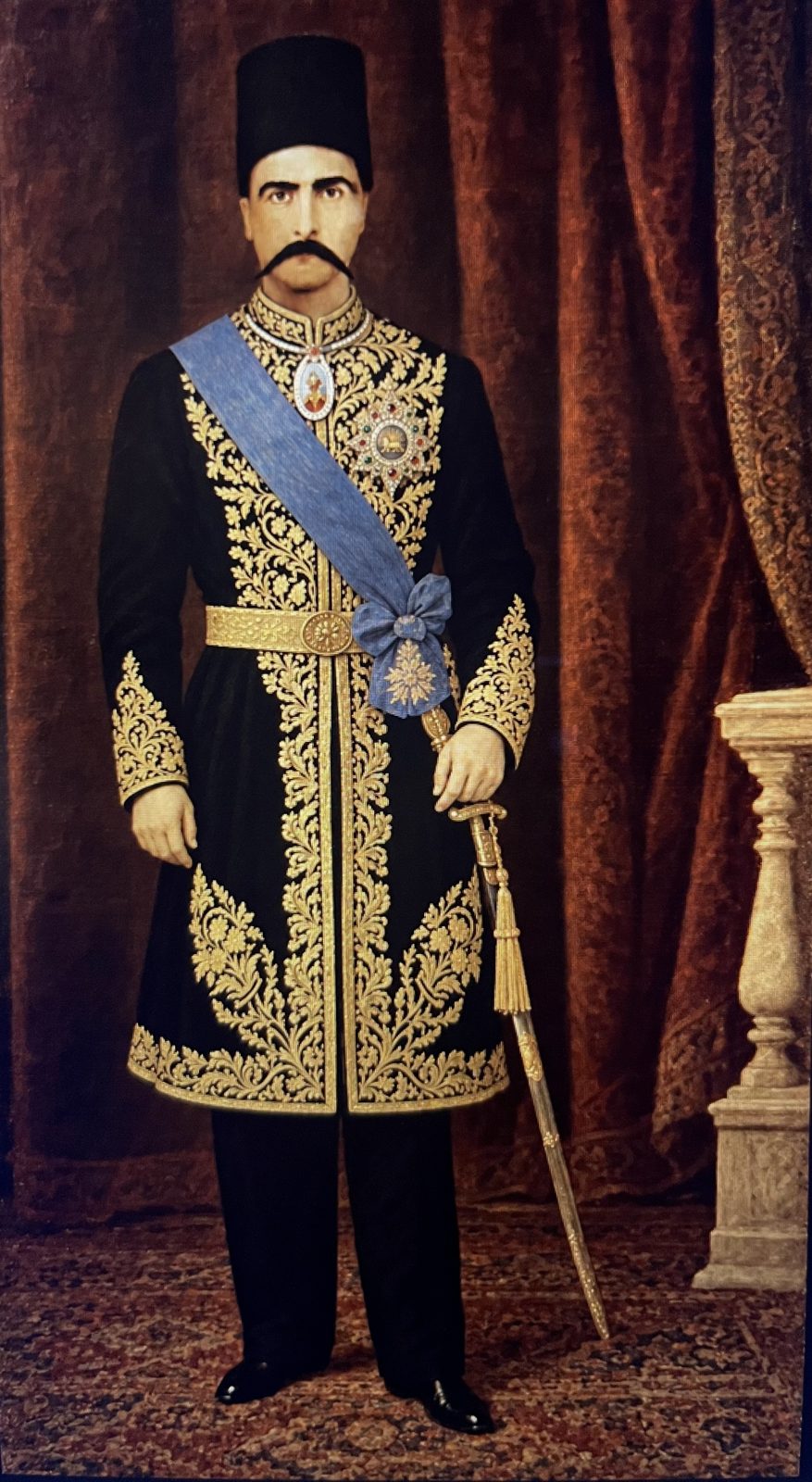
Sardar (a title) Mir Amanollah Khan Ghazanfari Amraee, a major landowner with strong popular ties and a deep love for his native Tarhan.
Nazar Ali Khan and the Family's Strong Position Around the Turn of the Twentieth Century
During the second half of the nineteenth century and the early twentieth century, the family's influence strengthened once more. A particularly significant figure was Nazar Ali Khan Ghazanfari Amraee, known by the title bestowed on him by the Qajar king, Amir Ashraf (‘the aristocratic prince/commander’). The chronicle describes his position as the result of both military success and political skill, at a time when competition for leadership in Lorestan (roughly the size of Dalarna, Sweden) was intense.
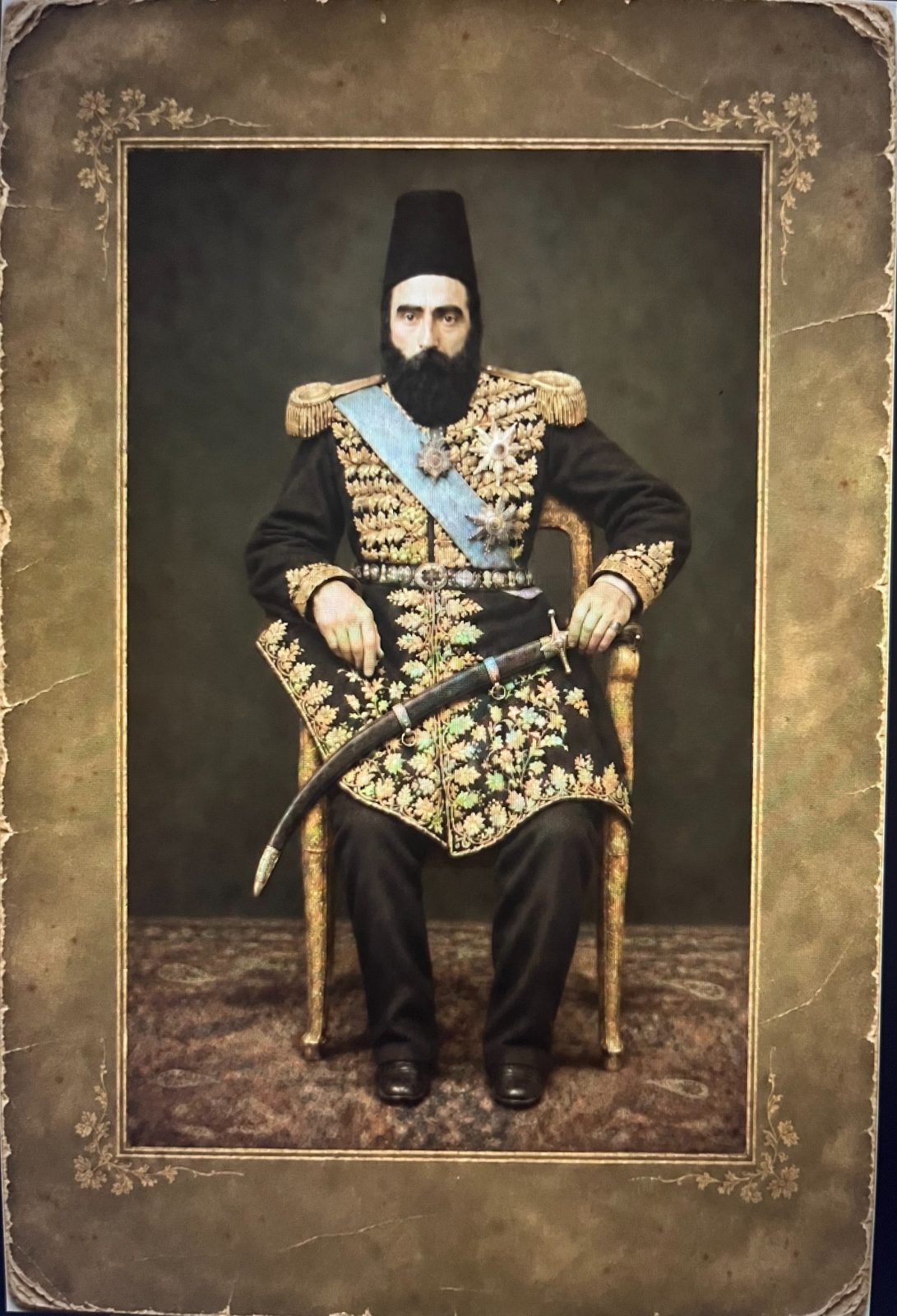
Nazar Ali Khan Ghazanfari Amraee, Amir Ashraf. One of the family's most influential regional rulers around the turn of the twentieth century, with a power base in Tarhan and Delfan.
In the account of his achievements, Tarhan (roughly the size of Dalsland, Sweden) and Delfan (slightly larger than the Swedish island of Öland) emerge as important parts of the family's power base. By rallying allies and asserting his position against rival families, he became one of the region's most influential figures. According to the chronicle, he also held overall leadership responsibilities throughout Lorestan (roughly the size of Dalarna, Sweden) for a time. The year 1907 is singled out as a milestone, when he was appointed regent of Lorestan. His direct exercise of power was largely rooted in Pish-Kuh (roughly the size of Dalarna, Sweden), where several large districts formed part of his political and social networks.
Nazar Ali Khan's era illustrates both the reach and the limitations of traditional leadership. Local chieftains and princes still possessed considerable practical resources, but their independence was affected by the struggle between Iran's central government, Qajar power holders, and various regional groups. The ability to balance these forces was just as important as the ability to mobilise soldiers.
Twentieth-Century Transformation: Ali Mohammad Khan and Amanullah Khan
Nazar Ali Khan's son Ali Mohammad Khan Ghazanfari Amraee, who bore the title Amir Azam (‘the great prince/commander’), belonged to the generation that had to navigate the transition from the older provincial power structure to a more centralised Iranian state. According to the chronicle, he was appointed his father's successor in Tarhan (roughly the size of Dalsland, Sweden) around 1920–1921. He was one of the leading figures in Lorestan (roughly the size of Dalarna, Sweden) during the first half of the twentieth century, and also served several terms as a member of parliament during that period. He was also a close friend of, and related through his sister's marriage to, the prime minister of the time, General Ali Razmara.
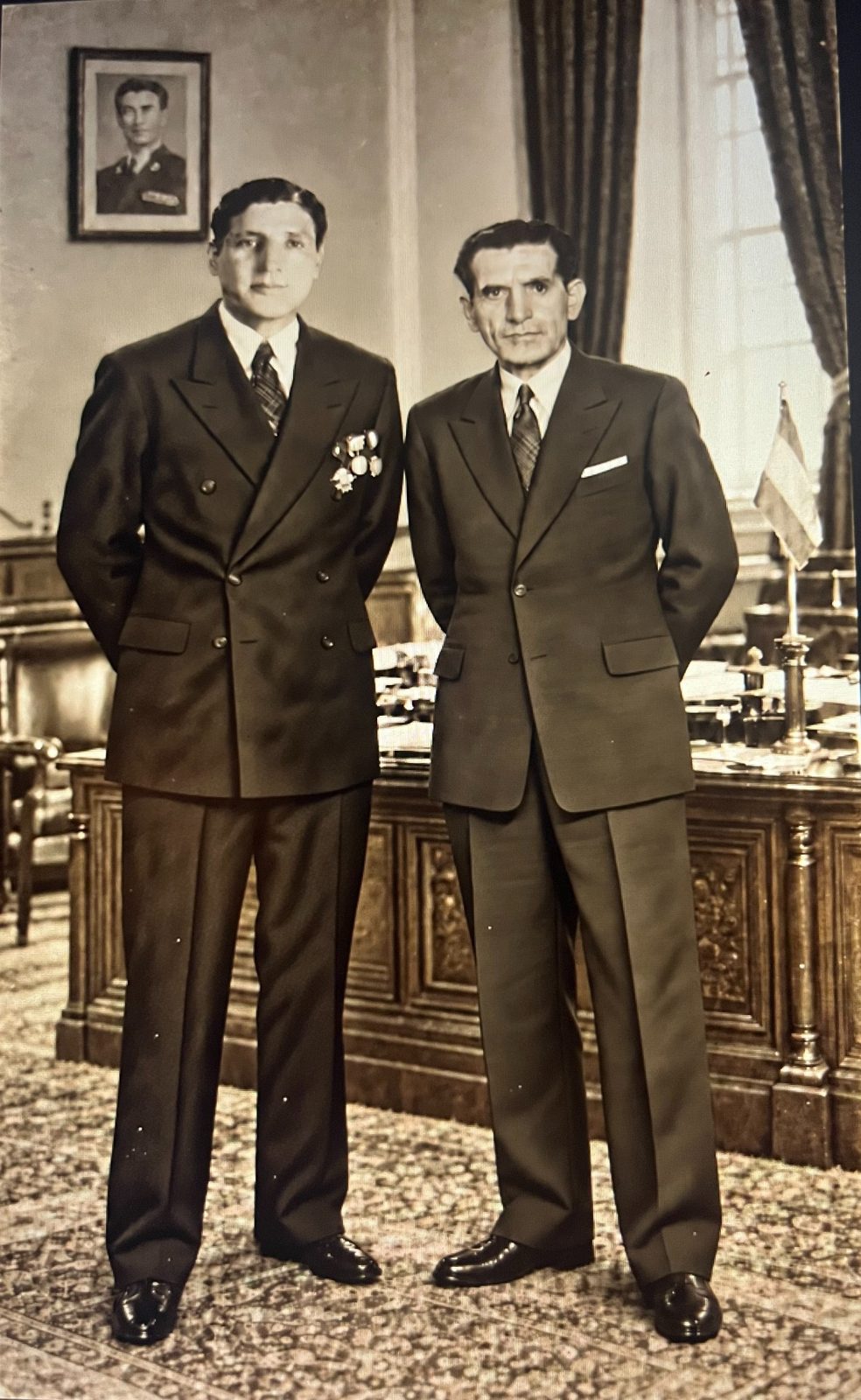
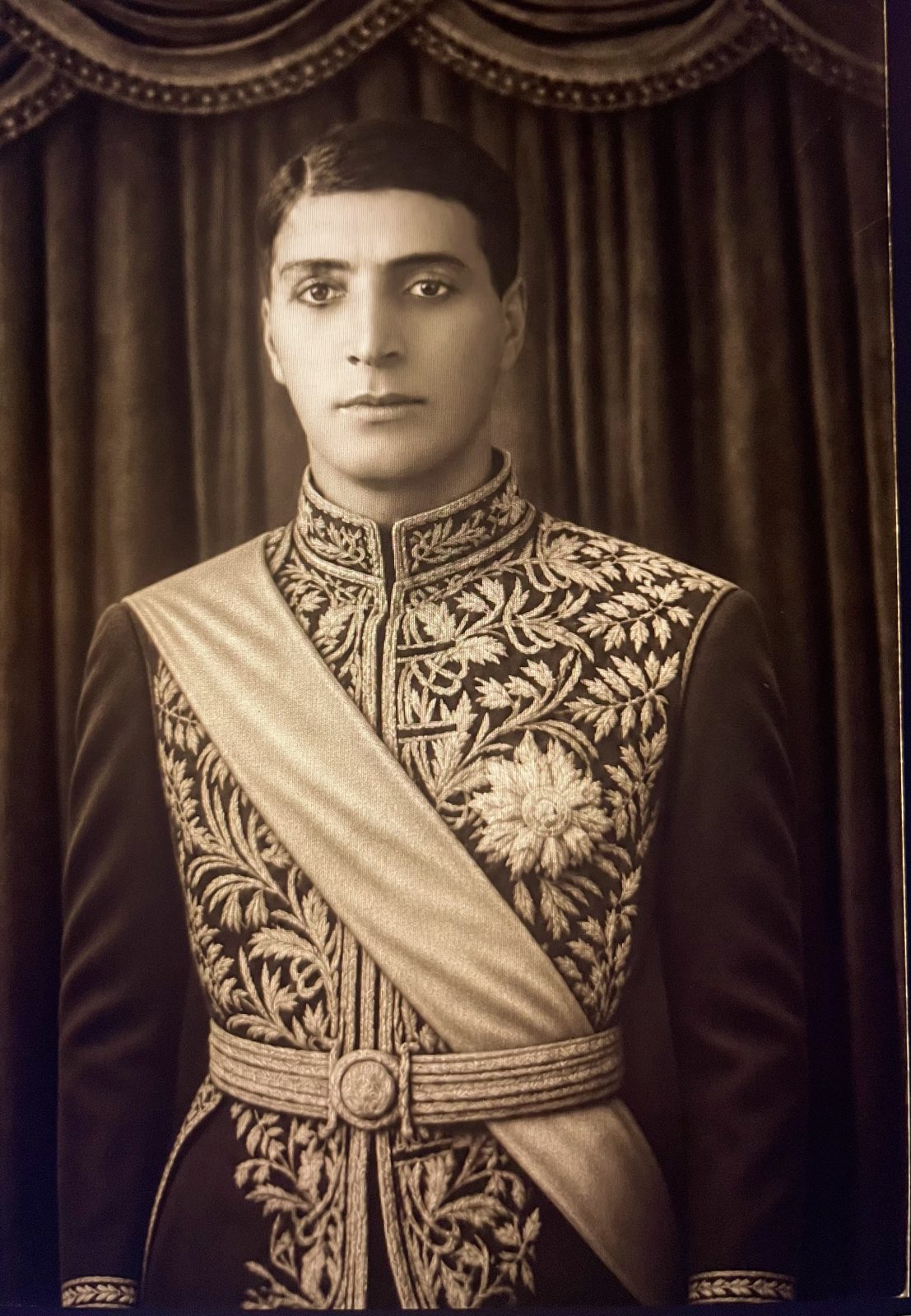
Ali Mohammad Khan Ghazanfari Amraee, bearing the title ‘Amir Azam’
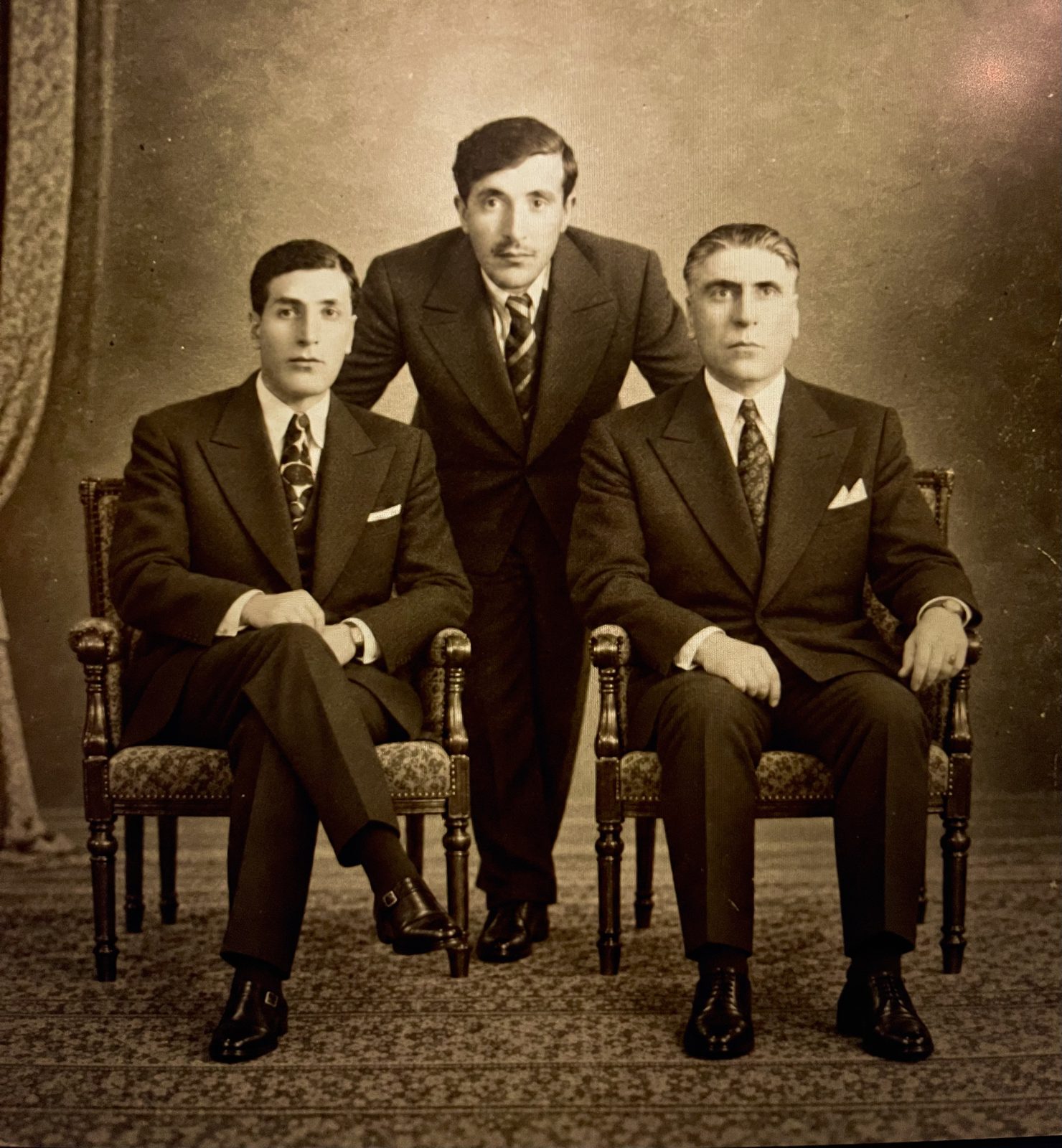
The cousins: on the right, Amanollah Khan ‘Sardar Bahador’; in the centre, the poet, historian, and author Esfandiar Khan; and on the left, Ali-Mohammad Khan ‘Amir Azam’.
Another prominent figure was Amanullah Khan Ghazanfari Amraee, who bore the title Sardar Bahador, ‘the brave commander’. He was the son of Mir Namdar Khan and belonged to the branch descended from the elder Sardar Amanullah Khan. During Reza Shah's reign, he chose to cooperate with the central government and took part in efforts to stabilise the situation in Lorestan (roughly the size of Dalarna, Sweden). He subsequently held governorships in, among other places, Tarhan (roughly the size of Dalsland, Sweden), Delfan (slightly larger than the Swedish island of Öland), and Selseleh (roughly the size of Öland), whose main town was Alashtar. The family history states that he received the Second Class of the Order of Homayun from Reza Shah himself, and that the shah used to call him Sarbaz-e man, ‘my soldier’. His standing combined military prestige, administrative experience, and strong local ties.
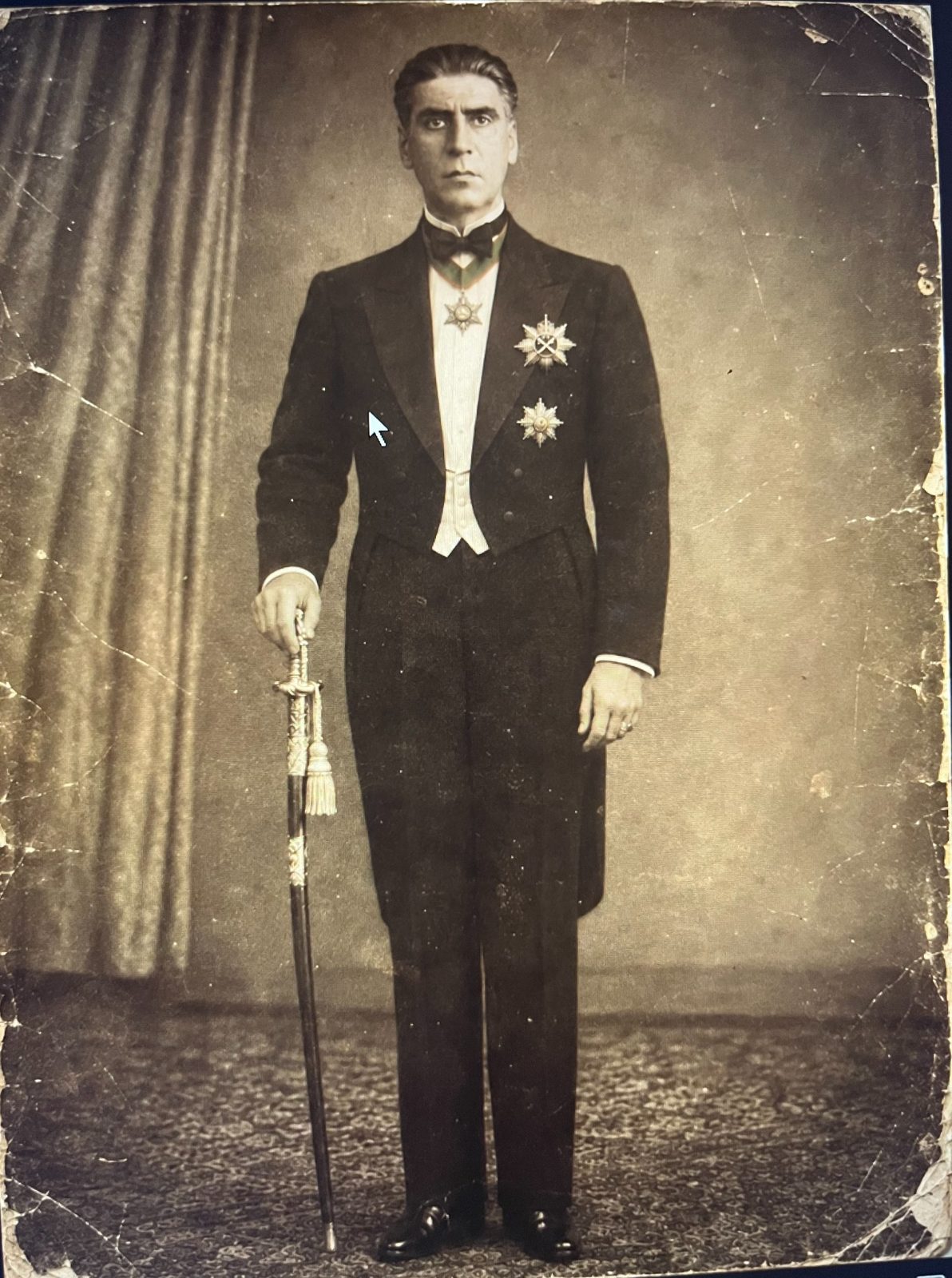
During the Pahlavi era, central authority grew considerably stronger in administration, state governance, and military organisation, progressively reducing the independent powers of the older regional rulers. At the same time, the family's role could endure through its estates, involvement in community affairs, and relationships with public institutions. This was a transformation in the forms of leadership rather than an immediate end to the family's importance. Throughout the twentieth century, and from the establishment of parliament onward, family members held senior offices virtually without interruption, including numerous governorships, parliamentary seats, and other high-ranking and central administrative posts. Members of the family also served at times as aides to Mohammad-Reza Shah.
Shah Ali-Reza Khan and the Building of the Local Community
Shah Ali-Reza Khan Ghazanfari Amraee, son of Amanullah Khan, represents a later stage in this development. The family chronicle describes him as a substantial landowner and a widely loved community figure in Tarhan (roughly the size of Dalsland, Sweden) during the mid-twentieth century. The family's landholdings, with their farming and agricultural tenancies, were still an important part of its economic and social standing. The people of the province and the local area called him ‘Shah Ali-Reza Khan’.
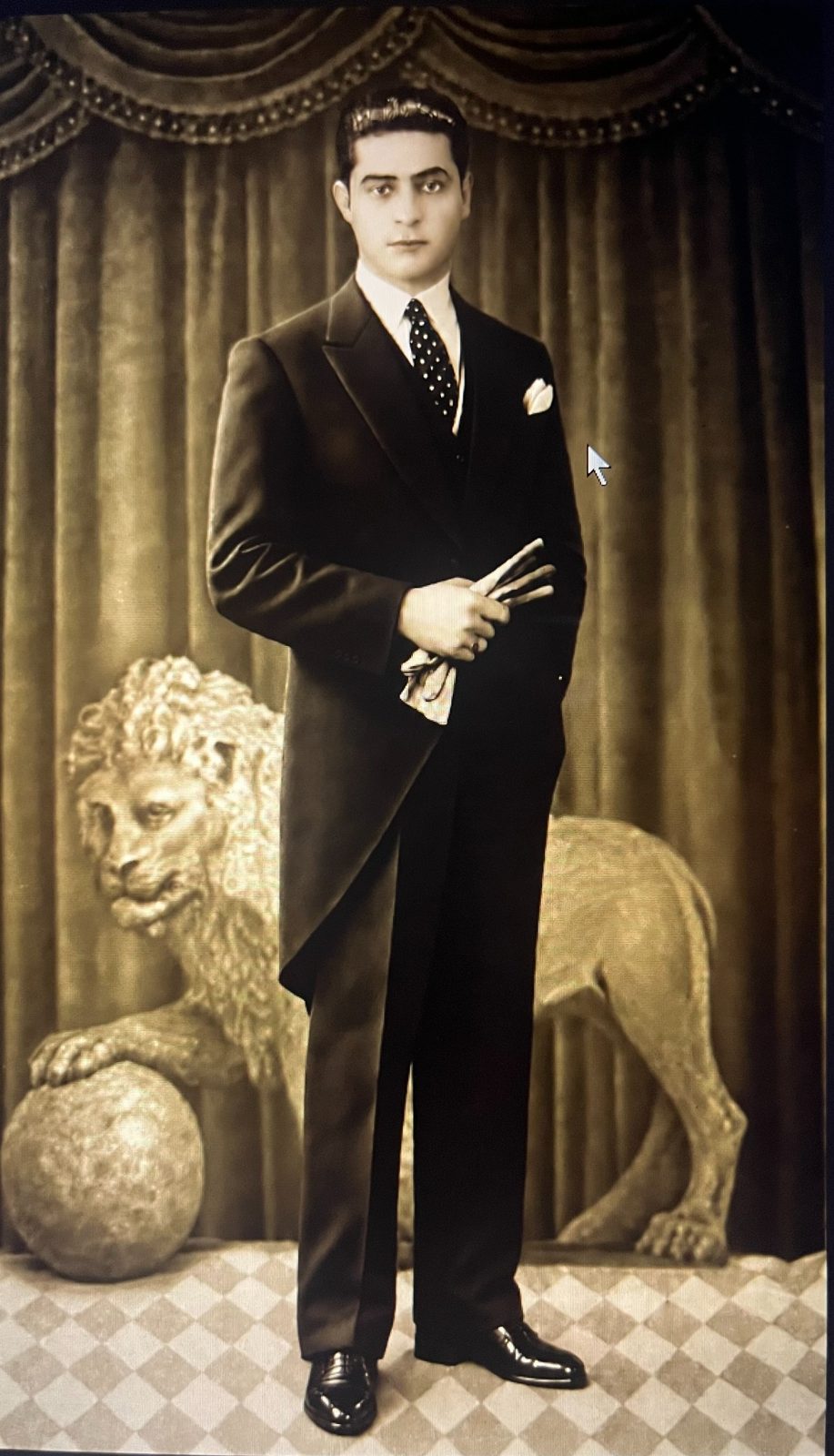
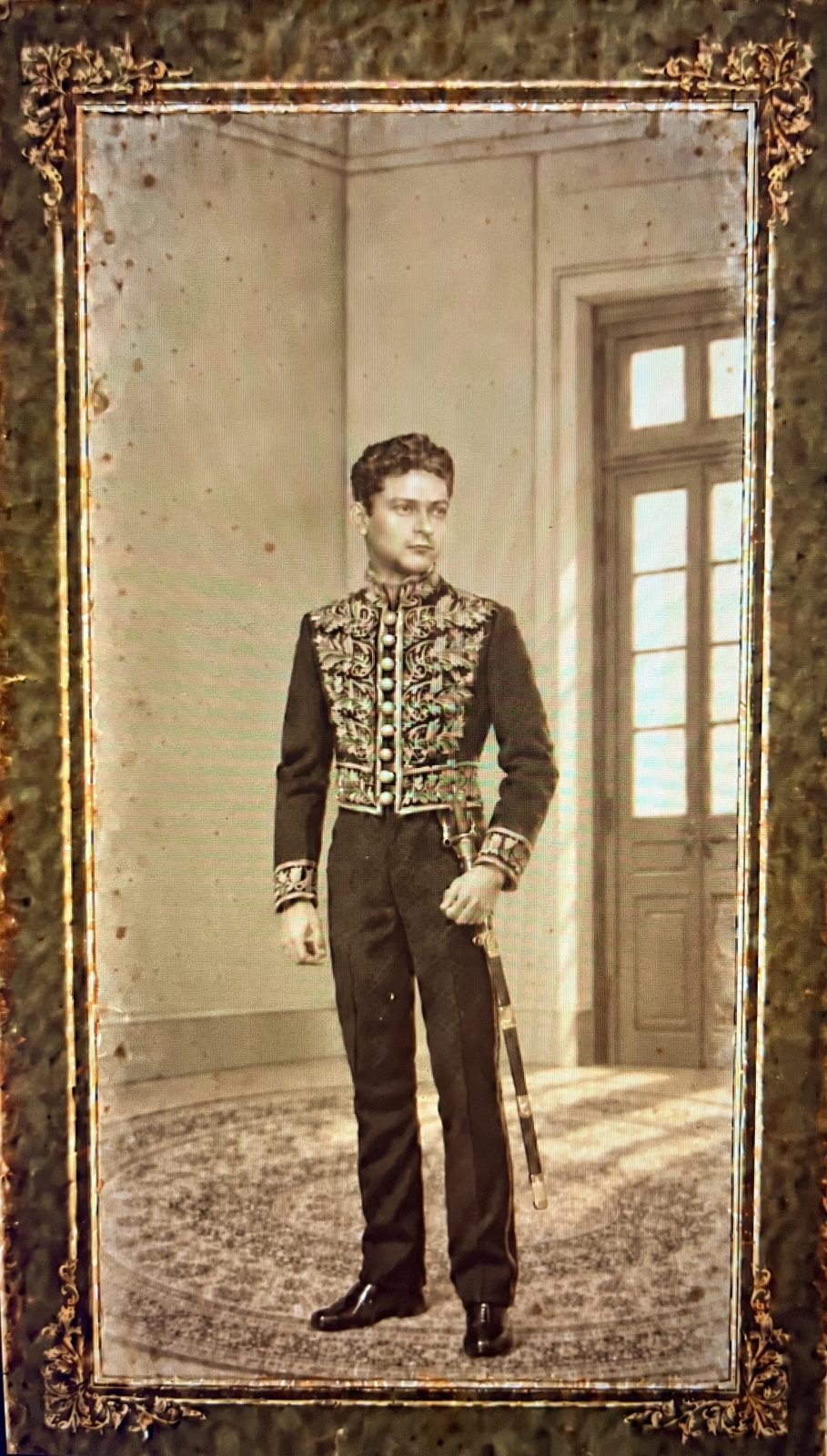
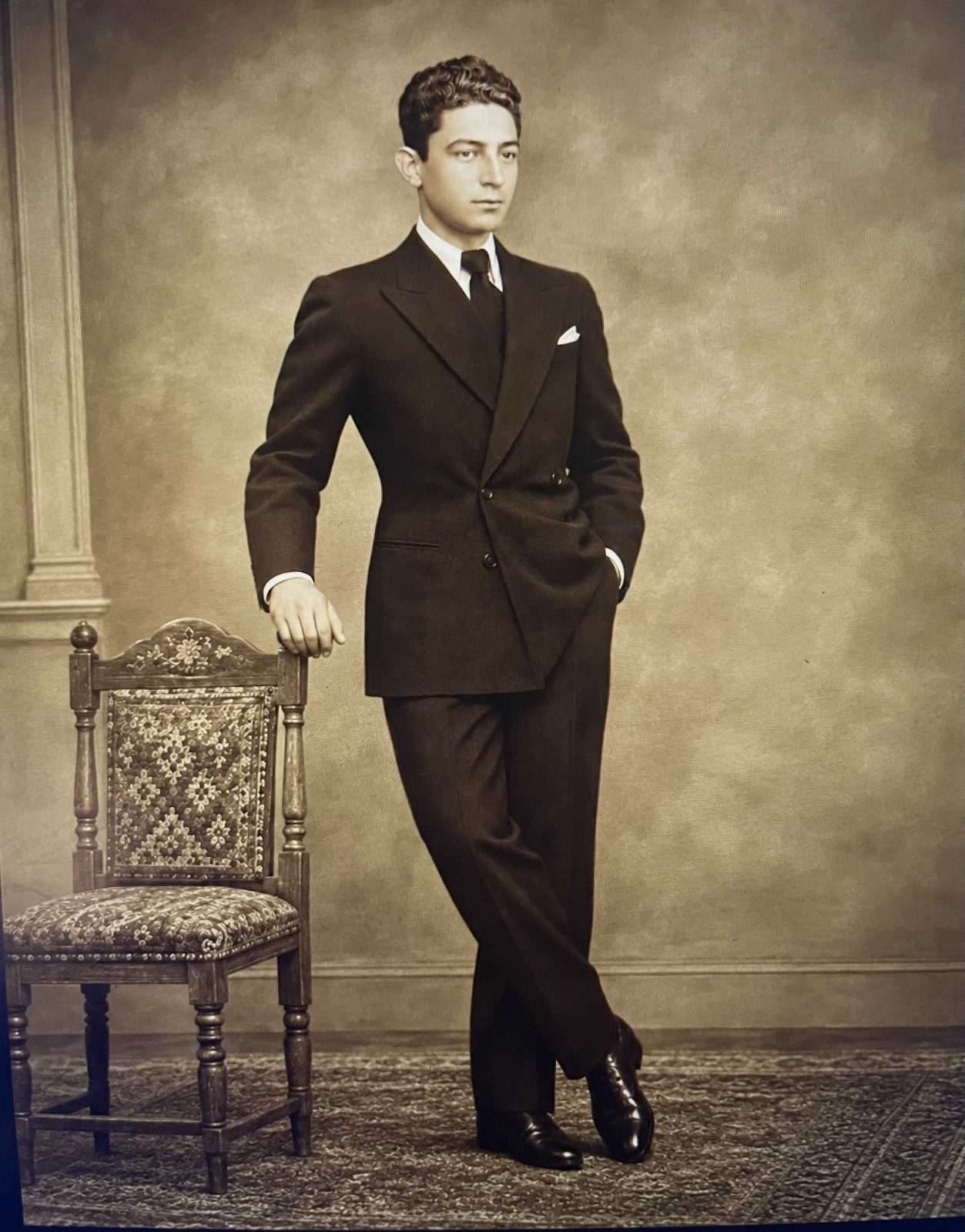
‘Shah’ Ali-Reza Khan Ghazanfari Amraee at his childhood home in Kuhdasht on two different occasions.
The chronicle pays particular attention to his contributions to Kuhdasht and Tarhan (roughly the size of Dalsland, Sweden). It mentions donations of land and financial support for education, healthcare, and municipal facilities, including an upper secondary school, a hospital, a public park, and municipal services. At this stage, the family's responsibility for its home region found a new expression: from the older right to govern and defend a territory to a commitment to its infrastructure and its inhabitants' everyday lives.
Continued modernisation changed the political standing of traditional princely and landowning families, but also allowed their history to live on in institutions, places, and family traditions. For the Ghazanfari Amraee family, Tarhan (roughly the size of Dalsland, Sweden) and Kuhdasht thus became not only places where their ancestors had exercised power, but also the setting for later generations' contributions to society.
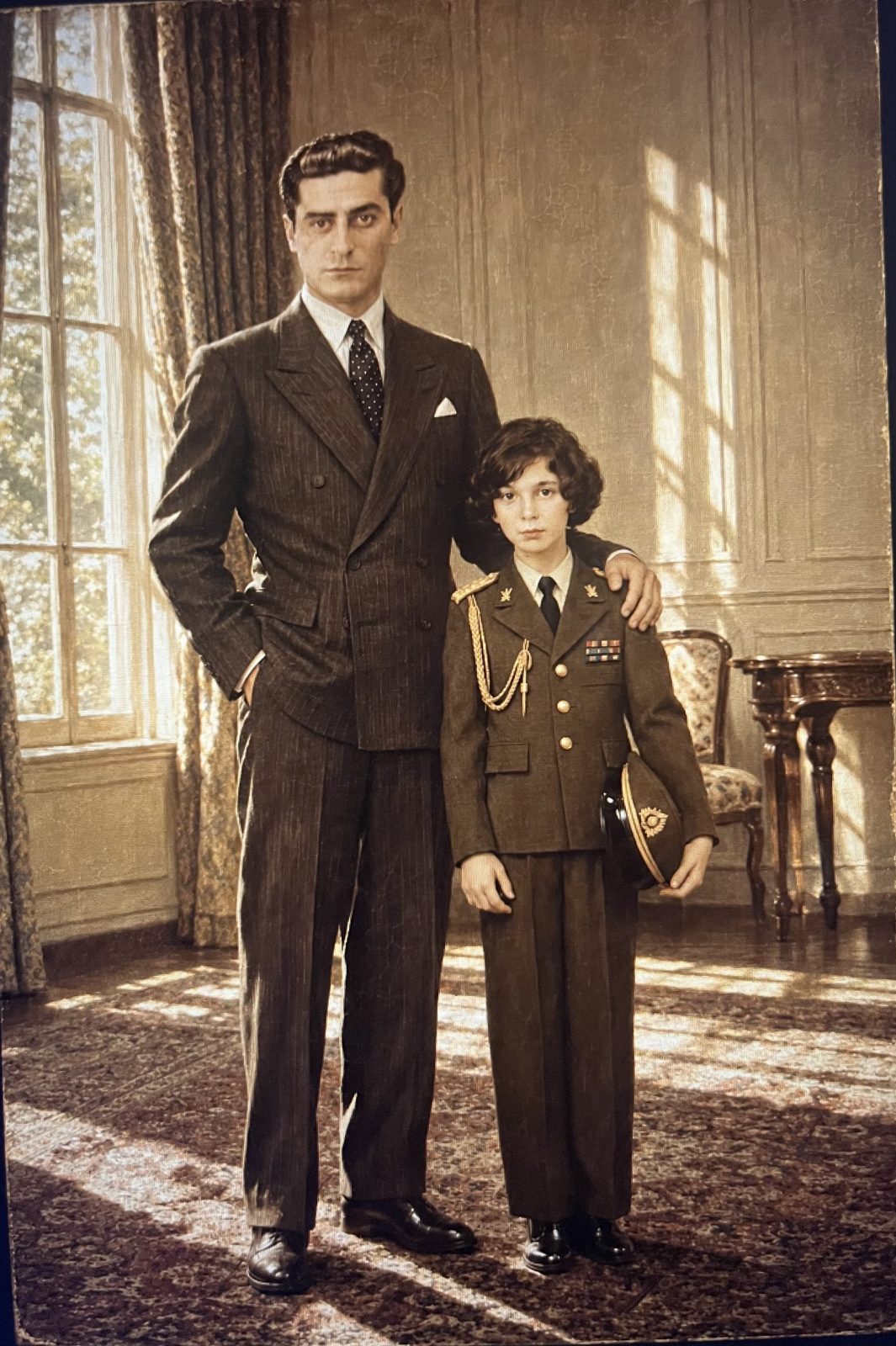
At this time, Ali-Reza Khan was one of the largest landowners in Lorestan, and probably in all of Iran, with tens of thousands of hectares. The family's historical standing, his father ‘Sardar Bahador's’ good reputation as a governor, and his own influence and popularity among Tarhan's clan leaders and population gave him a natural position as a provincial leader and authority. High-ranking officials were therefore frequent guests in his home.
Before the visit by Major General ‘Sarlashkar’ Mahmoud Nekuzad associated with this photograph, Ali-Reza Khan had the family tailor make a general's uniform for his eldest daughter, Fakhr-e-Azam ‘Farrah’ Khanom. According to family tradition, she was especially close to him and the object of his deep affection.
When the major general arrived, Farrah was allowed to wear the uniform. Her father introduced her as his own ‘general’, while Nekuzad was the central government's general. This small ceremony combined paternal pride with a quiet assertion of the household's own authority.
According to the family chronicle, Nekuzad understood the message, showed a moment's irritation, and then took it in his stride. After all, the visit had merely acquired one more general — whose commission had passed through the family tailoring establishment with unusual speed.
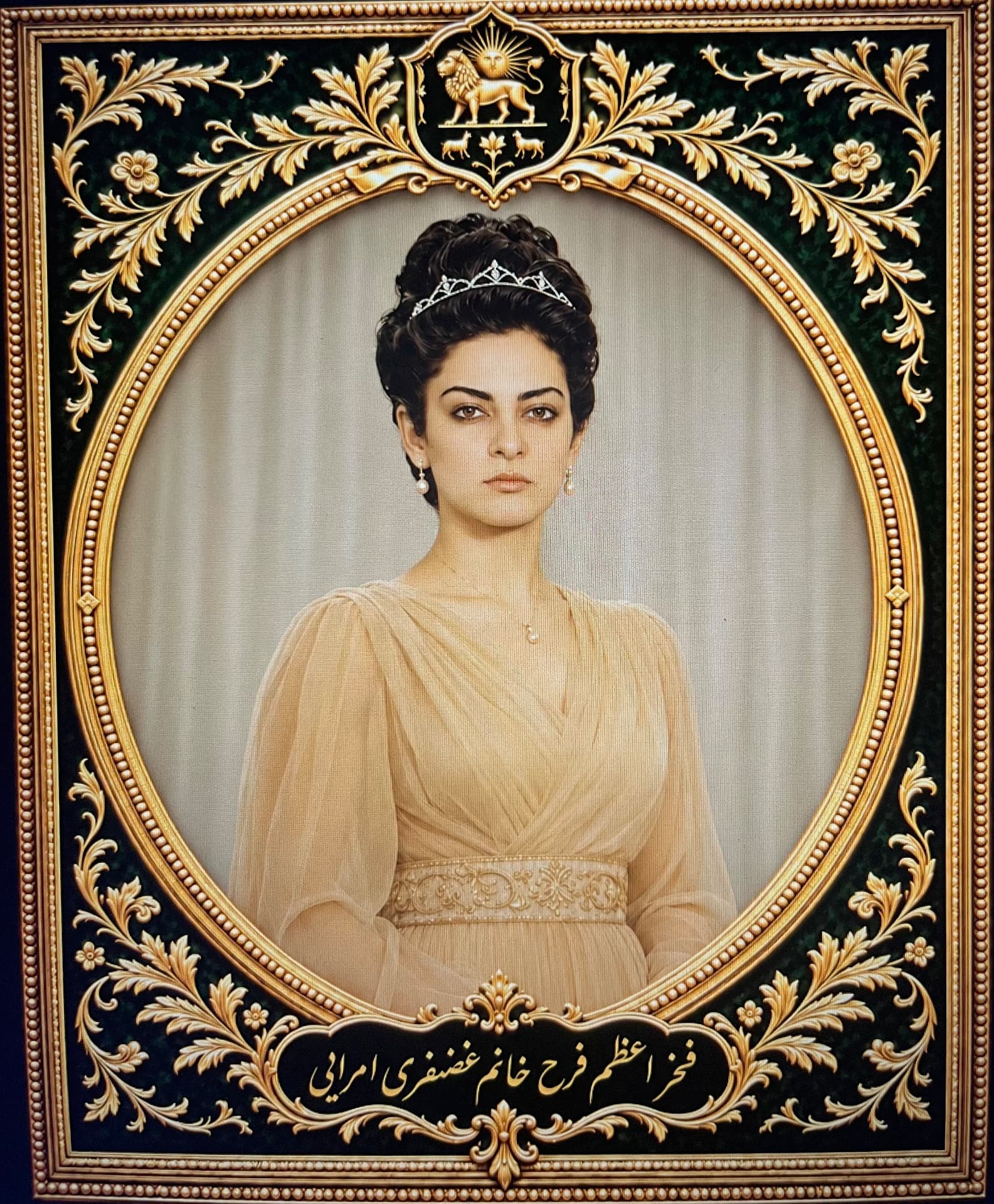
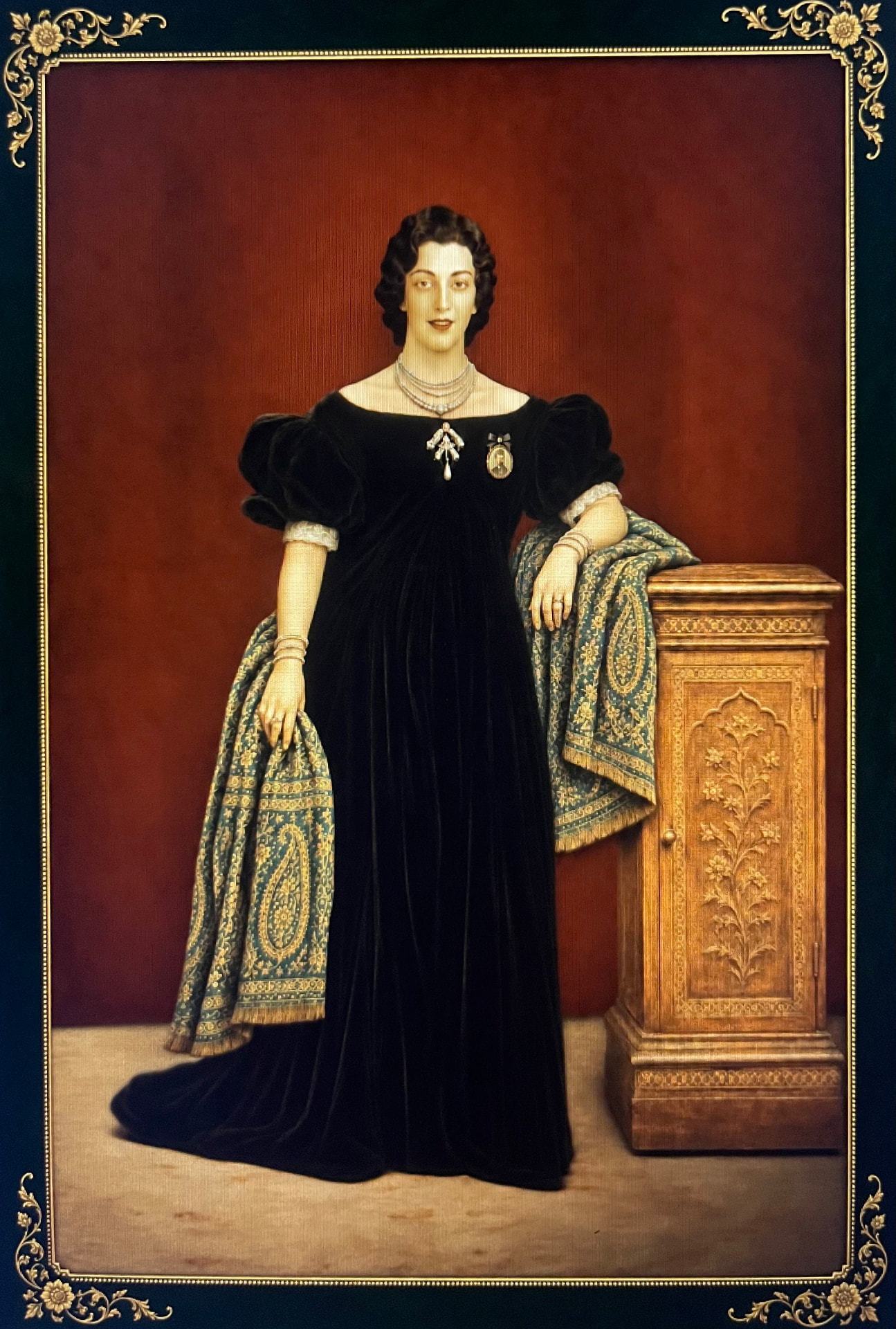
Turan-Dokht khanom – Generosity with a Will to Act
Turan-Dokht khanom, wife of ‘shah’ Ali-Reza khan Ghazanfari Amraee and mother of Farrah khanom, was born into prominent families on both her father's and her mother's sides and was a granddaughter of Prince Mozaffar-ol-Molk. Yet in the family's stories it is above all her own strength of will and force of character that endure: her courage, her organisational ability, and her conviction that resources also entailed a responsibility for others.
According to family memories, she worked at national level during the Pahlavi dynasty for prisoners' rights and better living conditions. Her concern also extended to those who sought her help in everyday life. She is said never to have refused anyone – yet whoever came to her could just as well leave with both a task to carry out and an opportunity to earn a living. She seems to have had an almost inexhaustible ability to find something that needed doing. With Turan-Dokht, generosity could therefore come with a job description.
Behind this lay, as the family remembers it, a wish to let people contribute and keep their dignity. Her wealth thus became a source of opportunities for others as well.
Her courage emerges most clearly in the account of the time Ali-Reza khan was surrounded in his home during an armed confrontation. Turan-Dokht then stood behind him to make sure that none of his enemies could take him by surprise from behind. Standing behind her husband took on a most literal meaning.
The quiet solemnity of the portrait shows one side of her. The family stories add another: a woman who could wear splendid jewellery and at the same time be the one who saw what needed doing – and saw to it that it was done.
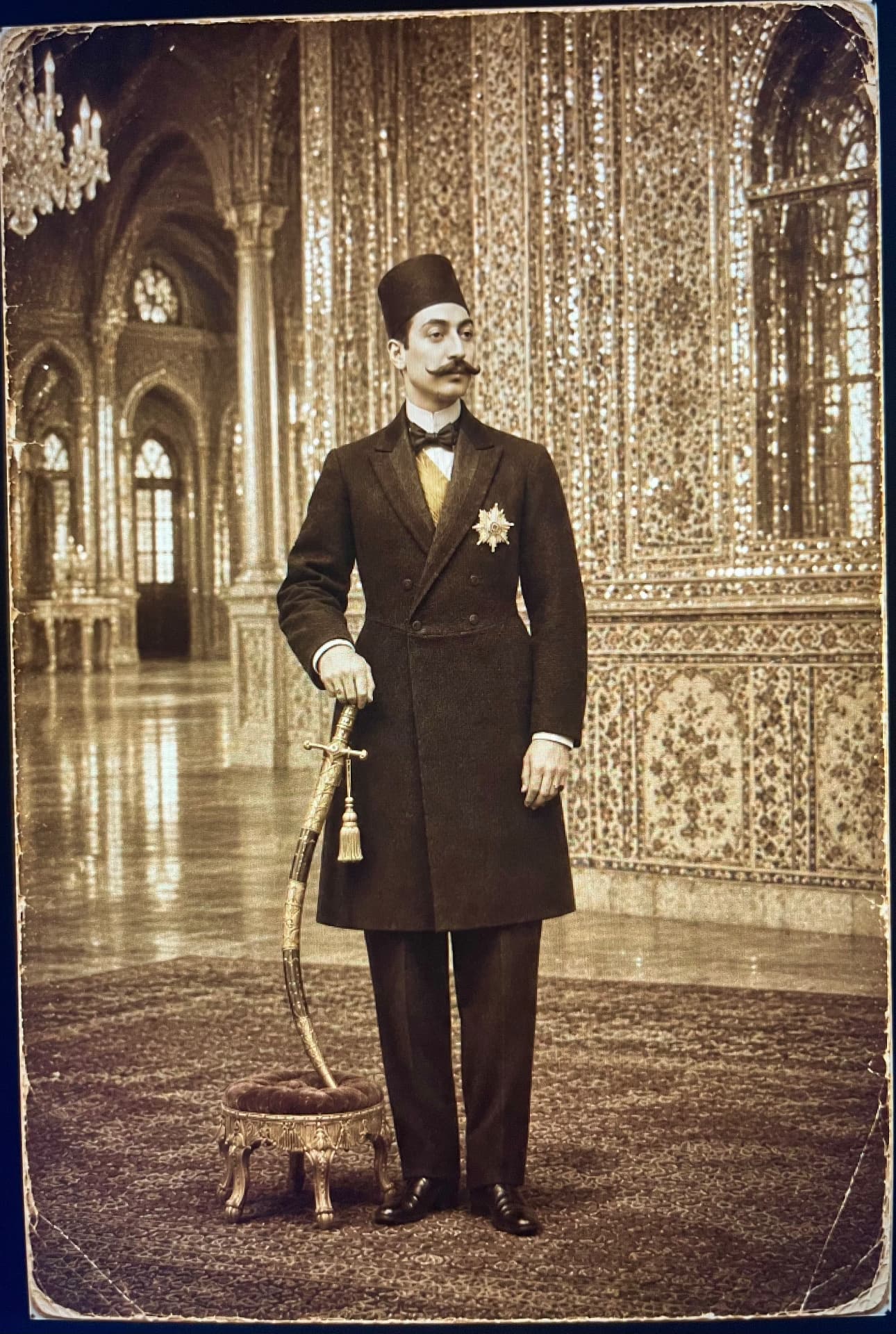
Prince Mozaffar-ol-Molk – Between the World of Learning and the Responsibilities of Power
Mirza Mohsen khan Mozaffar-ol-Molk belonged to a family in which education held a self-evident place. His father, the learned Abdol-Latif khan Tasouji, was teacher and mentor to the future king Naser al-Din shah and is known for his Persian translation of One Thousand and One Nights. Mozaffar-ol-Molk too received a thorough education before his life carried him from the world of study to the affairs of the court and the provinces.
Through his sister's marriage to Prince Masoud Mirza Zell-e Soltan Qajar he became closely tied to the prince's administration. There he received significant assignments, among them deputy governor-general of Lorestan, Hamedan, Borujerd and Khuzestan. Prince Zell-e Soltan, son of Naser al-Din shah Qajar, built during his ascendancy a sphere of power encompassing large parts of Iran. To serve in his employ therefore meant responsibility within a broad and demanding political context. Mozaffar-ol-Molk was regarded as a son of King Naser al-Din shah and also received the title of prince from the king.
In the family chronicle Mozaffar-ol-Molk appears as a man of strong will, diplomatic skill and a lasting interest in learning. There his career as an official is associated among other things with Hamedan, Lorestan and Khuzestan, as well as with building work and care for older structures. Local historical accounts also credit him with contributions in Khorramabad.
The family's memory of him especially brings forward the union of decisiveness and learning. At the same time, his activity belonged to the complicated provincial rule of the Qajar era, where power rested on negotiations, family ties and relationships with local leaders. His life thus contains both family history and a piece of Iran's wider history.
For his descendants the portrait becomes a reminder of these connections: between books and offices, between the court and Lorestan, and between one person's deeds and the stories that live on long after them.
Names, Historical Writing, and Symbolic Heritage
The name Ghazanfari derives from Ghazanfar, ‘lion’, a name associated with strength and valour. In the family's historical account, Amraee is linked to Amir and Mir and to traditions of leadership. Together, the two parts of the name express a central element of the family's understanding of itself: its princely origins, courage, and responsibility for the communities where earlier generations lived and worked.
An important part of this heritage was preserved by the author, historian, and poet Esfandiar Ghazanfari Amraee (1915–1993). In his work Tarikh-e Ghazanfari — The History of Ghazanfari — he gives a detailed account of the family's history, its prominent figures, and its relationships with the society of Lorestan. His historical writing is a central part of the family's own documentation and gives later generations a context for understanding its many branches.
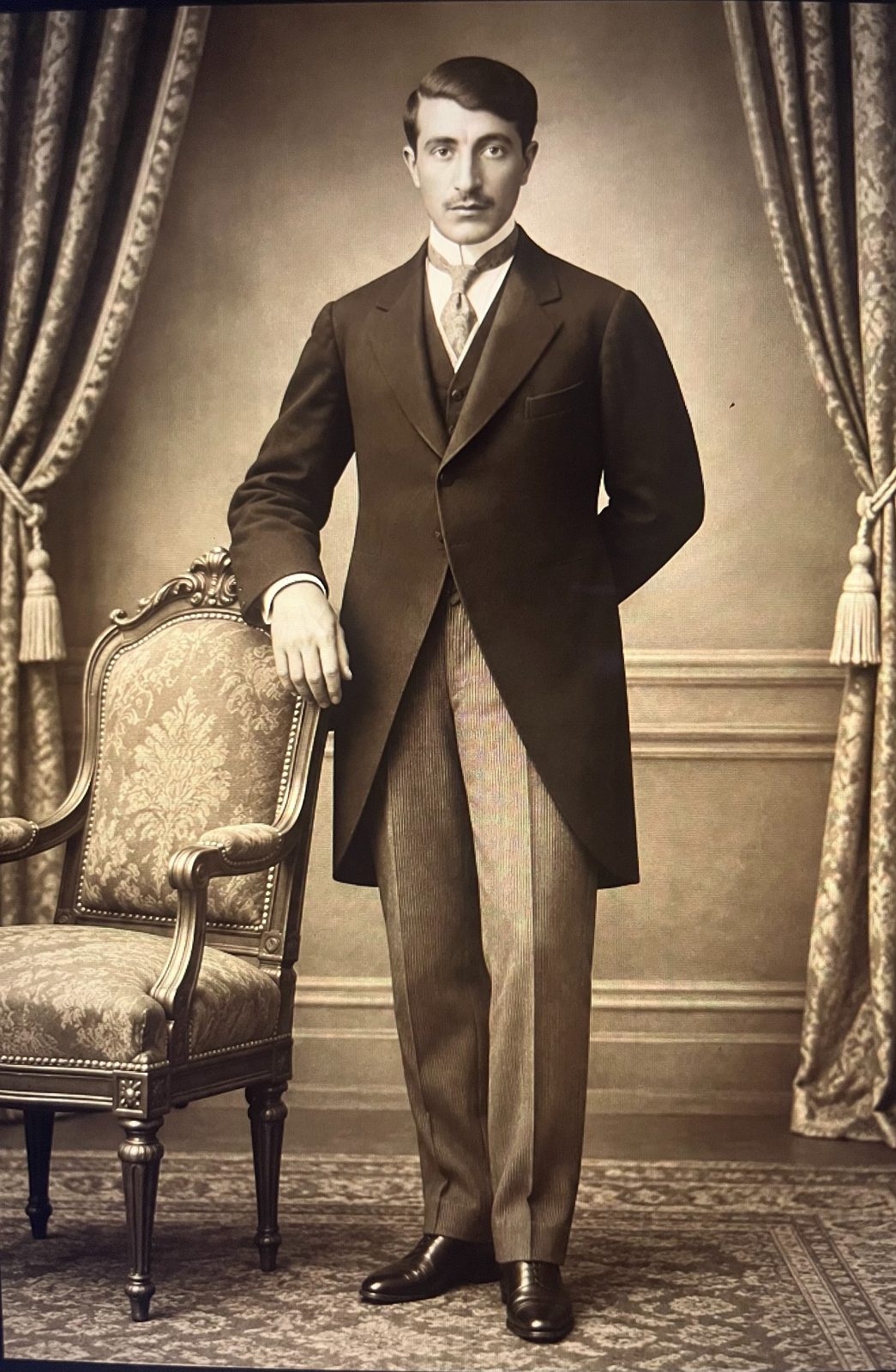
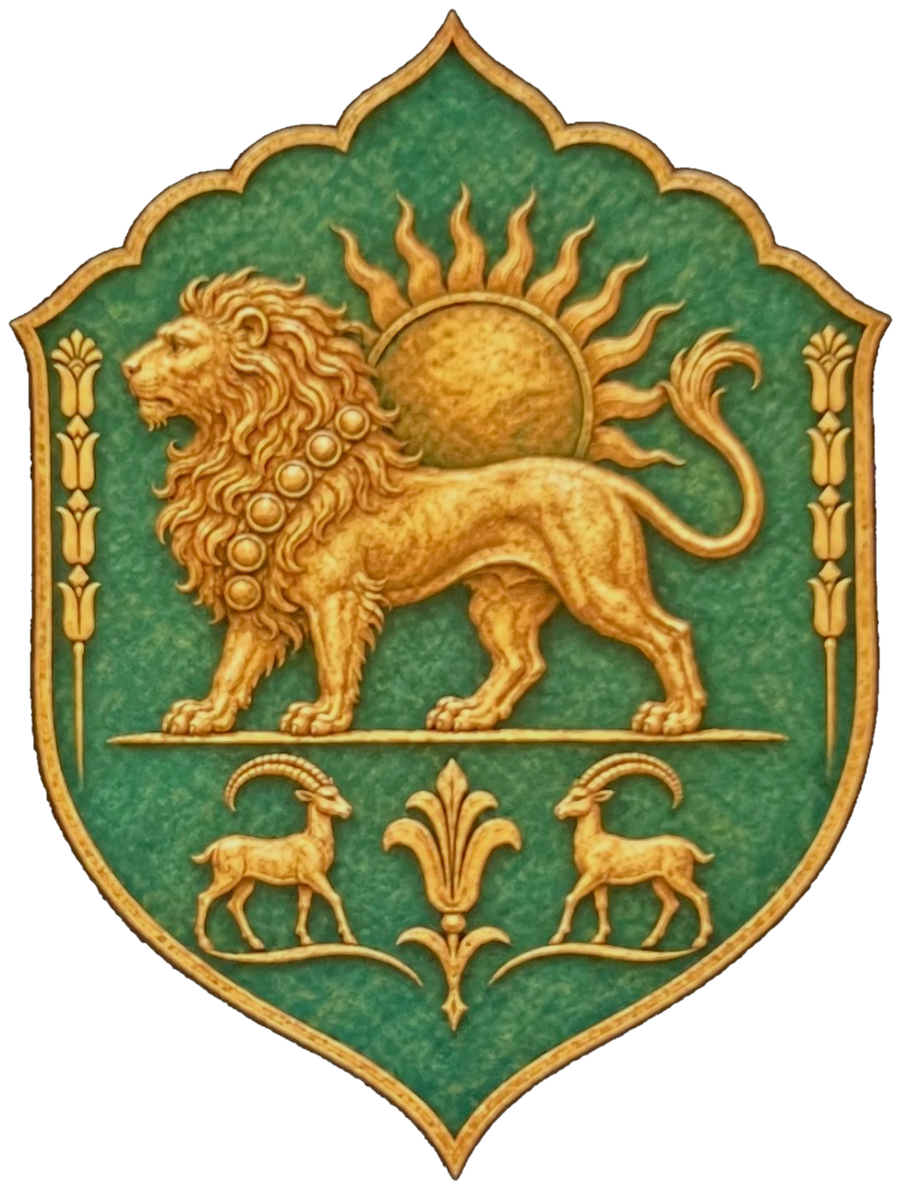
The family's present-day coat of arms brings together several of the traditions that emerge in its history. The lion and the sun draw on historical coin imagery and Persian symbolism, as well as names borne by the family's princes and qualities attributed to them. The ibexes recall Lorestan's ancient art and imagery, as well as the lion's hunting of these animals. The ornamentation is inspired by historical motifs from the region. Read more in the section on the coat of arms.
Carrying the Heritage Forward
The history of the Ghazanfari Amraee family stretches from the medieval atabegs and their rule over the vast territory of Lesser Lorestan, through generations of Mir and Khan rooted in Tarhan and Pish-Kuh (roughly the size of Dalarna, Sweden), to the community involvement of the twentieth century and the family's continuing cultural work. It brings together princely history and local accounts of defence, administration, political choices, and responsibility.
This website seeks to preserve and share the heritage of earlier generations, make the family's history accessible, and give future generations the opportunity to discover their roots. Through family trees, sources, stories, and historical images, the memory of the family is carried forward — as part of the history of Lorestan and western Iran. Now also happily rooted in beautiful Sweden.